
Cross-Country Shipping Snapshot
The Service
Move your car coast-to-coast without driving 3,000 miles
Cross-country shipping is what we run every day — the lanes are mapped, the carriers are vetted, the pricing is known
Cross-country car shipping means moving a vehicle 1,000+ miles across multiple states — most often coast-to-coast or between major regions. Your car is loaded onto a multi-vehicle carrier, dispatched along a high-volume interstate corridor, and delivered to your destination by a vetted long-haul driver. You don't put 3,000 miles on the odometer, you don't burn five days behind the wheel, and you don't pay for hotels along the way.
Long-haul economics work in your favor on cross-country routes. The per-mile rate steps down as distance increases — a 2,500-mile haul runs around $0.35 per mile, while a 500-mile haul runs closer to $0.75. Carrier fixed costs (fuel, driver pay, equipment wear) get spread across more miles, and major corridors like I-10, I-40, I-80, and I-95 have steady carrier availability year-round.
This page walks through what cross-country shipping actually costs, how long it really takes, when shipping beats driving, and how we vet every carrier before they touch your vehicle. Comparing methods? See open car transport, enclosed auto transport, door-to-door delivery, and expedited shipping.
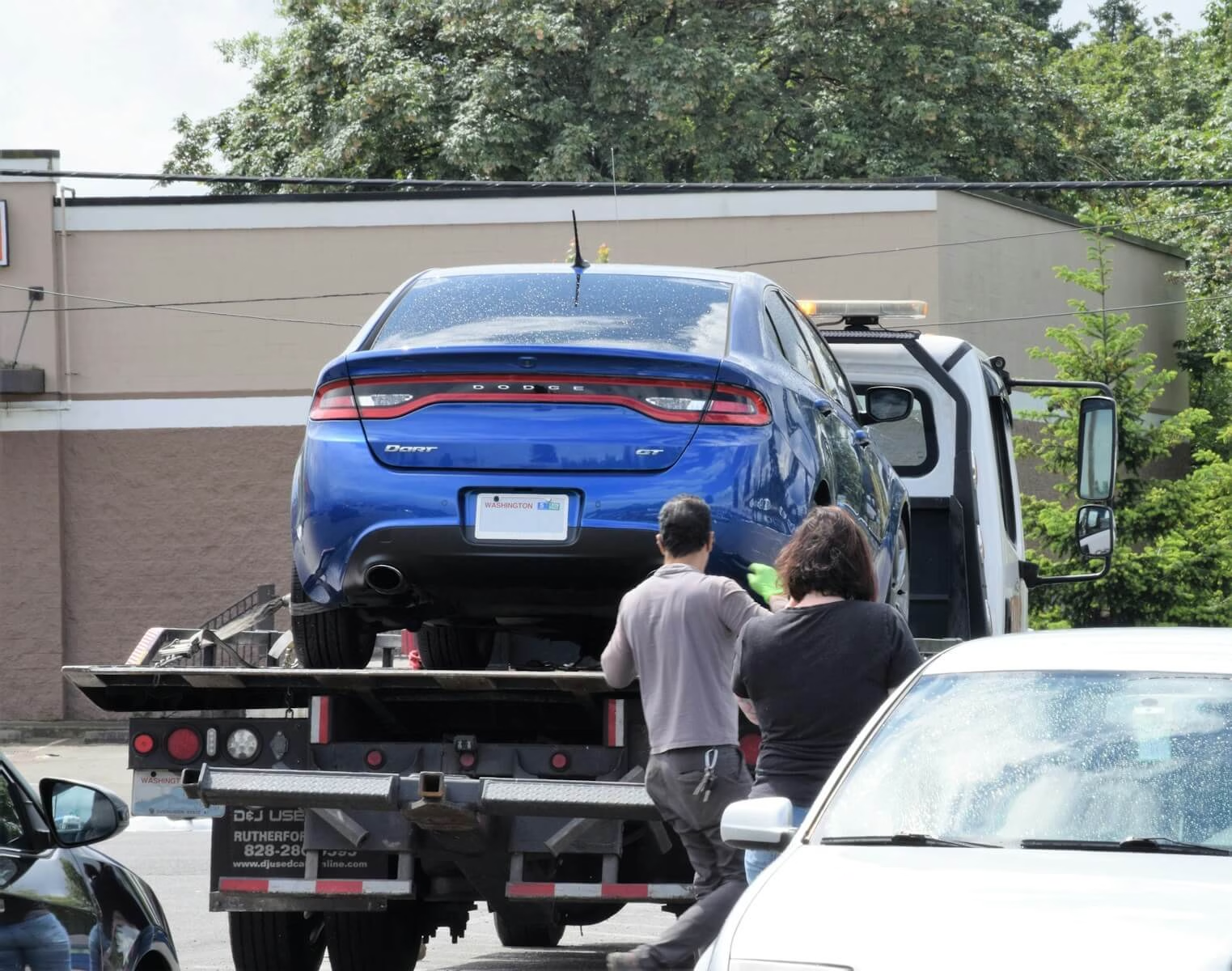
Long-haul carrier · Multi-state corridor
Quick Decision
Ship or drive cross-country — the 30-second answer
Once distance crosses 1,000 miles, shipping usually wins on cost and time
Head to Head
Shipping vs driving cross-country
The real math on a 2,800-mile move (New York → Los Angeles)
Driving math assumes 25 mpg, $3.85/gal national average, 5 hotel nights at $150, $50/day food, and $0.20/mile depreciation. Plane ticket NYC → LA not included in either column.
The Process
How cross-country car shipping works
4 steps from quote to delivery — no calls required to get a price
Transparent Pricing
What cross-country car shipping actually costs
Per-mile rates step down as distance increases — the economics of long-haul
Cross-country pricing is per mile, but the rate drops as distance grows. Carriers have fixed costs per trip — fuel, driver pay, equipment wear, weigh stations, tolls — and those costs get spread across more miles on long-haul loads. A 2,500-mile route is significantly cheaper per mile than a 500-mile haul because the math works in your favor.
Real cross-country route examples
Recent shipments from our dispatch books — actual prices customers paid on cross-country lanes:
Prices shown are open-transport sedans under normal demand. SUVs add ~$150. Trucks add ~$250. Enclosed transport runs 40–60% higher. Peak season (Oct–Nov, Mar–May) can add 10–20%.
What changes the price on a cross-country move
- Route corridor. Interstate-fed routes like I-95 (East Coast), I-10 (Southern), I-40 (Mid-South), and I-80 (Northern) are priced lower because carrier supply is steady. Off-corridor pickups or deliveries can add to the rate.
- Vehicle size and weight. SUVs add ~$150 to a sedan rate. Trucks add ~$250. Cargo vans and full-size SUVs can be priced as truck-class. Larger vehicles take more deck space, which means fewer cars per load.
- Pickup and delivery zone. Within 30 miles of a major interstate, your pickup is priced standard door-to-door. Beyond 30 miles, expect a $50–100 surcharge to cover the carrier's deadhead miles.
- Season. Snowbird traffic (Northeast/Midwest ↔ Florida and ↔ Arizona) peaks October–November and March–May. Cross-country lanes through the Rockies and Sierras can see weather-driven price shifts December–February.
- Transport type. Open transport handles 90% of cross-country loads. Enclosed runs 40–60% higher and adds 1–2 days because enclosed carriers are less common on long-haul routes.
- Vehicle condition. Operable vehicles drive on and off. Inoperable vehicles need winch loading, which costs more and limits which carriers can take the load on a long-haul route.
- Booking lead time. Booking 5–7 days ahead usually beats next-day rates. Last-minute long-haul loads force carriers to deviate from planned routes, and that costs money.
Carrier Vetting
How we vet every long-haul carrier before they touch your vehicle
6 checks. No exceptions. Even the cheapest carrier on the lane doesn't get the load if they fail.
After 10+ years in this industry, here's what we've learned: the difference between a good long-haul carrier and a bad one isn't price — it's vetting. The cheapest carrier on a coast-to-coast lane is sometimes also the one that arrives late, damages a vehicle, or skips out on insurance claims. On a cross-country move, where your car sits on a trailer for 7–9 days, that risk compounds.
A carrier that fails any one of these doesn't get your load. Doesn't matter if their rate is the lowest on the board. This is how we keep damage incidents rare — and why most of our cross-country business is repeat customers and referrals.
Honest Take
When cross-country shipping isn't right for you
A handful of situations where we'll tell you not to ship — before you book
Cross-country shipping makes sense for most long-distance moves. But there are cases where it doesn't — and we'll tell you that before we take your money. Here's when we'd recommend something else:
If your vehicle is high-value or rare, enclosed transport may be the better cross-country option — costs more, adds 1–2 days, fully protected.
Coverage
Popular cross-country car shipping routes
High-volume corridors with steady carrier availability — every route below has a dedicated guide with current pricing and transit times
Customer Reviews
What customers say about cross-country shipping with Navi
Recent reviews from customers who shipped 1,500+ mile routes
Ready to ship your car cross-country?
Avg Transit: 4–9 Days · From $599 · No upfront payment · All 50 states
FAQ
Frequently asked questions
Direct answers to the most common cross-country shipping questions
How much does it cost to ship a car cross-country?
Cross-country car shipping costs $0.35–$0.55 per mile for open transport, with the rate stepping down on longer routes. Real examples: New York to Los Angeles runs about $1,299 for a sedan. Miami to Los Angeles is around $1,099. Seattle to Miami is about $1,399. Enclosed transport runs 40–60% higher. SUVs add ~$150, trucks ~$250.
How long does cross-country car shipping take?
Coast-to-coast routes (2,500+ miles) typically take 7–9 days in transit. Mid-distance cross-country routes (1,500–2,500 miles) take 5–7 days. Pickup happens within 1–3 days of booking. Federal hours-of-service rules cap drivers at 70 hours per 8 days, which is why a truck can't run nonstop across the country — and you shouldn't trust any broker who claims otherwise.
Is it cheaper to ship a car or drive it cross-country?
For a New York to Los Angeles move, shipping costs around $1,299 sedan, open transport. Driving the same route costs roughly $2,080 once you add fuel (~$480), 5 hotel nights (~$750), food (~$250), and vehicle depreciation (~$600 at $0.20/mile). Shipping is usually cheaper once distance exceeds 1,000 miles — and that's before you account for 5–7 days of your own time.
What's the cheapest way to ship a car across the country?
Open transport is the cheapest cross-country shipping method. About 90% of long-haul shipments use it, including new vehicles delivered to dealerships. Costs are spread across 7–10 vehicles per trailer, which lowers your per-car rate. Enclosed transport typically costs 40–60% more for the same coast-to-coast route.
Can I track my cross-country shipment?
Yes. Every Navi shipment includes real-time GPS tracking through Navi Track 360™. You get pickup and delivery ETAs, location updates throughout transit, and direct access to support — all tied to your order. On a 7–9 day cross-country haul, this matters more than it does on a short route.
What if my pickup or delivery location is rural?
Within 30 miles of a major interstate, your pickup or delivery is priced as standard door-to-door. Beyond 30 miles, expect a $50–100 surcharge to cover the carrier's deadhead miles to reach you. On cross-country routes, this rural premium is more common because carriers stay close to high-volume interstate corridors.
Do you ship cross-country in winter?
Yes, year-round. Winter cross-country routes through the Rockies, Sierras, and Northern Plains can see weather-driven delays — usually 1–2 days added to transit. Snowbird season (Oct–Nov and Mar–May) drives demand on Northeast/Midwest ↔ Florida and Arizona routes and can add 10–20% to the price. We'll flag both at booking so you know what to expect.
How far in advance should I book cross-country shipping?
Book 5–7 days ahead for the best rate and carrier availability. Last-minute long-haul loads force carriers to deviate from their planned routes, which costs more. For peak snowbird season or holiday travel weeks, 10–14 days ahead is better. Same-day or 24-hour cross-country pickup is possible but requires expedited service at 50–100% above standard rate.
Can I put personal items in my car for cross-country shipping?
Up to 100 lbs of personal items can ride in the trunk or cargo area, secured in a box or suitcase. Front seats and front floorboards must be empty. If you need to ship more than 100 lbs, declare it at booking so we can price it correctly. Personal items are not covered by the carrier's cargo insurance — only the vehicle is.
What insurance covers my car during cross-country transit?
Carrier cargo insurance covers damage caused by the carrier during transport. Open carriers typically carry $100,000–$250,000 in cargo coverage. Enclosed carriers carry $250,000–$1,000,000. We verify active insurance on every assigned carrier before they're cleared to haul your load. Certificates of insurance are available on request.
What if my car is inoperable?
Inoperable vehicles can ship cross-country but cost more due to winch loading and the smaller pool of carriers willing to take them. We have a dedicated inoperable vehicle shipping service for non-running cars — drives that need to be loaded with a winch or forklift.
Do I need to be there for pickup and delivery?
You or someone you authorize (18 or older) needs to be present at both pickup and delivery to do the inspection walkaround, sign the Bill of Lading, and confirm vehicle condition. On a cross-country move, this is especially important — the pre-shipment inspection is the baseline against which any damage claim is filed. The BOL is also the only paperwork most shipments require — here's the full list of documents needed to ship a car to another state.