
Truck Shipping Services Snapshot
The Service
Truck shipping is not standard car shipping — different weight, different clearance, different carriers
Nationwide truck shipping and truck transport — light-duty, heavy-duty, dually, lifted, and classic pickups, door to door, with the right carrier matched to your truck's weight class, ride height, and modifications.
Shipping a pickup truck isn't the same as shipping a sedan. An F-350 dually weighs nearly twice as much as a midsize car and won't fit on every carrier. A lifted Silverado with 6 inches of suspension lift can't clear the top deck of some open carriers and gets bumped to a different trailer type — or a different load entirely. A long-bed crew cab F-250 takes up more deck space than two compact sedans combined, which affects how the carrier prices the load. The dispatcher who books your shipment needs to know what truck class you have, what modifications it carries, and whether it can fit on the trailer they're pulling. If they don't ask, they don't know. And if they don't know, you find out when the carrier shows up and refuses the load.
Our truck shipping service is built around the operational reality. We ask about truck class, weight, ride height, bed length, cab configuration, and modifications at quote time. We match your truck to a carrier with the right trailer type and deck space. Light-duty trucks (F-150, RAM 1500, Silverado 1500) ride on standard open carriers. Heavy-duty trucks (F-250/F-350, RAM 2500/3500, Silverado 2500/3500 HD) need carriers with higher weight ratings. Dually trucks need wider deck positioning. Lifted trucks need clearance verification. And classic or collector trucks usually need enclosed transport for weather protection.
This page covers the truck classes we ship, real per-mile pricing by truck class, how lift kits and modifications affect carrier options, the open vs enclosed decision for trucks, what to measure and prepare before pickup, and honest cases where shipping isn't the right call. Shipping something other than a truck? See open car transport, motorcycle transport, and door-to-door delivery. For time-critical truck moves with hard deadlines, see express auto transport.
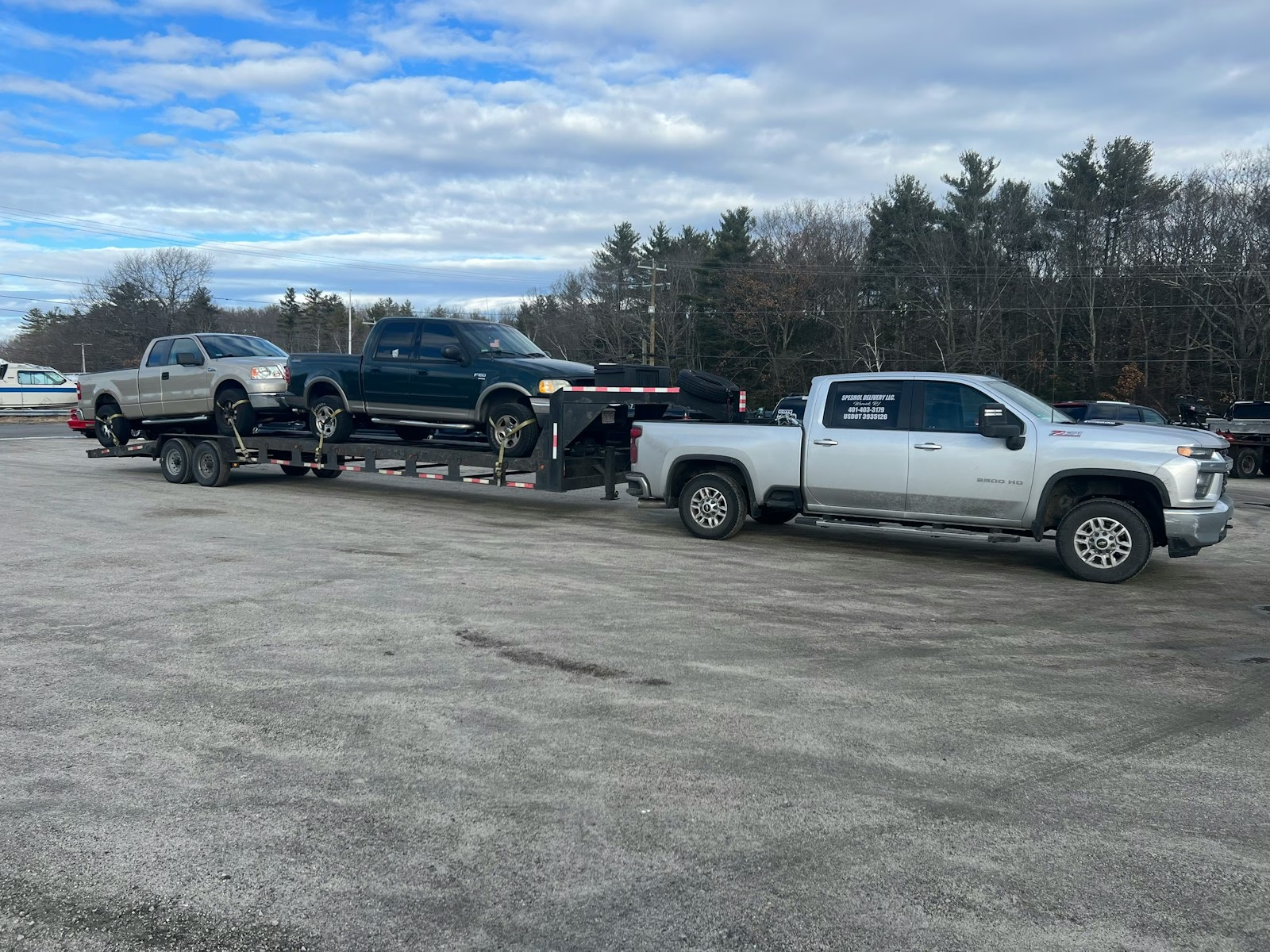
All truck classes · Door-to-door · Vetted carriers
Truck Classes We Ship
6 truck classifications — and how each ships differently
Truck class affects pricing, carrier type, and trailer space — match the right carrier to your truck
Transparent Pricing
What truck shipping actually costs
Real per-mile rates by truck class — open transport, standard pickup window
Truck shipping prices at $0.45 to $1.10 per mile depending on truck class, distance, and route. Per-mile rates drop as distance increases — long cross-country routes have the best per-mile economics. Short interstate moves cost more per mile but less in total. Below are real pricing examples for each truck class on common corridors:
Prices reflect open transport, standard pickup window (1–7 days). Add 30–50% for express transport (24–48 hour pickup). Add 40–60% for enclosed transport. Lifted trucks add 20–30% above base class. Non-running trucks add a $150–250 winch fee.
What changes the price on a truck shipment
- Truck class. Light-duty trucks (F-150) price at +15–25% over sedan rates. Heavy-duty (F-250/F-350) add 30–50%. Dually trucks add 40–60%. Each step up requires a carrier with higher weight rating and wider deck space.
- Modifications. Lift kits, oversize tires, aftermarket bumpers, roof racks, and snorkels all affect carrier compatibility. Trucks taller than 7 feet (with mods) often can't ride on the top deck of an open carrier — pushing them to ground-level only, which limits load options.
- Bed and cab configuration. Long-bed crew cab trucks take up more deck space than short-bed regular cabs. This can affect both pricing and carrier availability on busy routes.
- Distance. Per-mile rates drop with distance. A 300-mile move costs $1.50–$2.00 per mile. A 2,500-mile move costs $0.55–$0.75 per mile. Long-haul truck shipments have the best per-mile economics.
- Route popularity. Major lanes (Texas to Florida, California to Texas, Northeast to South) have dense carrier supply — better prices and faster pickup. Rural routes price higher and take longer.
- Pickup speed. Standard pickup (1–7 days) is base rate. Express pickup (24–48 hours) adds 30–50%. Same-day pickup (where available) adds another 20–30%.
- Season. Snowbird season (Oct–Nov southbound, Apr–May northbound) tightens carrier capacity on north-south corridors. Summer is generally cheapest for truck shipments across all routes.
- Operable status. Non-running trucks require winch-equipped carriers and add $150–250 to the standard rate. Mention this at quote time so the right carrier is dispatched.
Transport Type Decision
Open vs enclosed transport for trucks
Most trucks ship open — but some shouldn't. Honest take on which is right for yours.
Before Pickup
Truck owner pre-shipping checklist
6 things to verify before the carrier arrives — most truck shipping issues come from missed steps here
The Process
How truck shipping works
4 steps from quote to door delivery
Carrier Vetting
How we vet carriers handling your truck
6 checks. Higher weight rating doesn't lower the standard.
Heavy-duty trucks and duallys require carriers with higher weight ratings and more experience with oversized loads. We don't relax vetting standards because the load is bigger — we tighten them. Same six-point check applies to every carrier, with extra attention to weight rating documentation and oversize load experience for heavy-duty and dually shipments.
Honest Take
When driving the truck makes more sense than shipping
Honest cases where the shipping math doesn't work
Customer Reviews
What truck owners say about Navi
Recent reviews from truck-specific shipments
Ready to ship your truck?
From $449 · All truck classes · Vetted carriers · All 50 states
FAQ
Frequently asked questions
Direct answers to the most common truck shipping questions
How much does it cost to ship a pickup truck?
Pickup truck shipping ranges from $0.45 to $1.10 per mile depending on truck class and route. Real examples on open transport: F-150 short-distance (~300 mi) costs $449–$599. F-250 mid-distance (~800 mi) costs $849–$1,099. F-350 dually cross-country (~2,500 mi) costs $1,799–$2,299. Use the instant quote calculator for your exact route.
How much more does it cost to ship a heavy-duty truck vs a light-duty?
Heavy-duty trucks (F-250, F-350, RAM 2500/3500, Silverado HD) cost 20–35% more than light-duty equivalents on the same route. Dually trucks (DRW, F-450, RAM 4500/5500) add another 15–25% on top of heavy-duty rates because they need wider deck positioning and higher weight-rated carriers.
Can you ship a lifted truck?
Yes, with clearance verification. Measure the truck's total height from ground to highest point (cab, antenna, roof rack, lift kit added). Trucks up to 7 feet (84 inches) total height can ride on the top deck of an open carrier. Taller trucks get bumped to ground-level loading only — which is fine but limits load options. Trucks with 10+ inch lifts may exceed all standard carrier dimensions and require oversize-permit carriers.
Is enclosed transport available for trucks?
Yes, but height-restricted. Enclosed trailers max out around 7 feet of interior clearance. Most stock pickups fit. Lifted trucks usually don't. Recommended for classic/collector trucks, show-quality builds, custom paint, or limited-edition models (Raptor R, RAM TRX, Colorado ZR2). Adds 40–60% over open transport.
How long does it take to ship a truck across the country?
Cross-country truck shipments (2,500+ miles) take 7–10 days transit. Shorter routes are faster: 300 miles takes 1–3 days, 800 miles takes 3–6 days, 1,500 miles takes 4–7 days. Add 1–7 days for pickup window (standard) or 24–48 hours (express).
Can I ship a non-running truck?
Yes. Non-running trucks require winch-equipped carriers and add $150–250 to the standard rate. Common scenarios: project trucks, salvage trucks, broken-down work trucks, and trucks shipped to mechanics or restoration shops. See inoperable vehicle shipping for details. The truck still needs to roll and steer — completely seized trucks need flatbed tow service instead.
Can I leave a tonneau cover, toolbox, or roof rack on my truck?
Hard-mounted tonneau covers and bed-mounted toolboxes are usually fine — flag them at booking so we confirm carrier deck space. Soft tonneau covers should be secured or removed. Roof racks affect total height — measure and report at booking. Cargo carriers, snorkels, and aftermarket bumpers all need to be flagged for clearance verification.
Can I put items in the truck bed?
Up to 100 lbs of personal items in the cab (secured, in a box or bag) at no extra cost. Truck beds should be empty — loose items in an open bed can fly out during transit and aren't covered by carrier insurance. If you need to ship larger items with the truck, ask about adding them to a separate quote.
Can I ship multiple trucks at once?
Yes. Multi-truck shipments are common for fleet moves, dealer transfers, and family relocations. Consolidating 2–4 trucks onto a single trailer saves 10–25% per truck vs separate single-truck quotes. Open carriers fit 7–10 standard pickups (fewer for duallys or oversized). See multi-vehicle shipping for details.
Is my truck insured during transport?
Yes. Every Navi shipment is covered by the carrier's cargo insurance. Open carriers carry $100K–$250K per vehicle. Enclosed carriers carry $250K–$1M. Active coverage verified on every carrier before assignment. For high-value custom trucks ($75K+ retail), consider car shipping insurance for gap coverage.
How do I prepare my truck for shipping?
Six things: (1) Measure total height if lifted. (2) Document modifications. (3) Empty the bed and secure tonneau cover. (4) Reduce fuel to ¼ tank or less. (5) Disable aftermarket alarms. (6) Photo-document existing condition. The driver takes their own pickup photos; yours are your backup if there's a discrepancy at delivery.
Do I need to be present for pickup and delivery?
You or an authorized representative (18 or older) needs to be at both pickup and delivery to sign the Bill of Lading and verify condition. If you can't be there, designate someone — neighbor, family member, dealership rep, mechanic. Tell us who at booking and we'll add their name and contact info to the order.