
Classic Car Shipping Snapshot
The Service
For owners shipping vehicles that can't be replaced — only restored
Specialized enclosed transport for pre-1980 originals, restored vintage, muscle cars, European classics, British roadsters & concours-bound collectors
Classic car shipping is its own discipline. The vehicles are 30, 50, sometimes 80 years old. Original sheet metal that no longer comes from any factory. Carburetors that haven't been tuned since they left the assembly line. Bias-ply tires that don't appreciate being yanked sideways onto a trailer. Patina that took half a century to develop and can be erased by one careless ratchet strap. A 1967 Shelby GT500 is not a Tesla — it doesn't drive onto a carrier the same way, doesn't load the same way, and doesn't tolerate the same handling.
Our classic car shipping service is built around the operational reality of moving these vehicles. Enclosed transport is the default — non-negotiable for paint, chrome, and finishes that can't be touched up at any modern body shop. Winch loading handles non-runners and barn finds without anyone trying to push a 4,000-lb vehicle up a ramp. Soft-loop frame straps protect original bumpers and chrome. Direct coordination with restoration shops, auction houses, and concours organizers handles the timing piece. And carriers who've actually shipped a '57 Chevy Bel Air handle the carrier matching piece.
This page covers the eight classic vehicle eras we ship most, what pre-shipping prep actually matters for a vintage vehicle, how non-runners and restoration projects are handled differently, and what classic car insurance coverage actually protects. For the full range of car transport options across every vehicle type, see our main guide. For ultra-modern luxury exotics, see luxury car transport instead. For operational mechanics of enclosed shipping, see enclosed car transport.
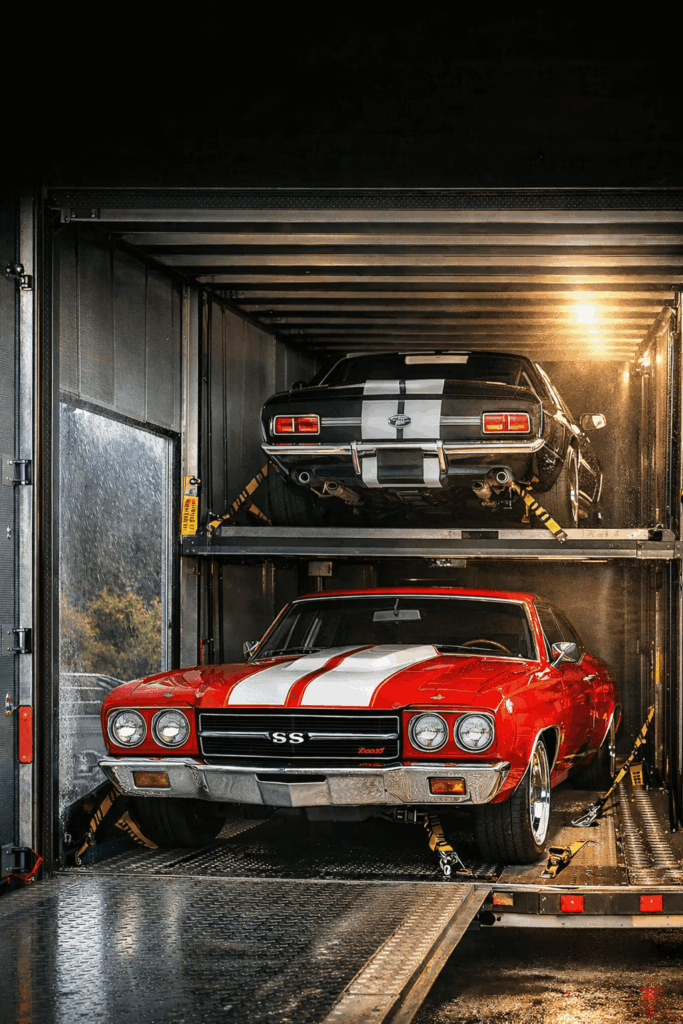
Enclosed transport · Winch loading · Auction & concours coordination
Quick Decision
Classic car shipping or standard transport?
If the vehicle has irreplaceable parts or original finish, the answer is classic. Period.
Head to Head
Why enclosed is the only realistic choice for a classic
Open vs enclosed — what each actually protects against
For a $3K driver-condition classic, open might still be defensible. For anything restored, numbered, or with original finish, enclosed isn't an upgrade — it's the only realistic choice.
The Process
How classic car shipping works
4 steps from quote to delivery — built around the realities of vintage vehicles
Pre-Shipping Checklist
How to prep a classic car for transport
Six prep steps that protect your vehicle and create the documentation trail you'll want if anything goes wrong
Classic car shipping prep matters more than standard car prep because the vehicle's condition is the value. Damage that would be a minor body shop touch-up on a Honda Accord can knock 10–20% off the appraised value of a numbered Camaro. Spend an hour on prep — it's cheap insurance.
The thirty minutes spent on this checklist is the most valuable thirty minutes in the entire transport. Do it.
Transparent Pricing
What classic car shipping actually costs
Enclosed runs 40–60% above open transport. Single-car enclosed adds another 30–50% on top.
Classic car shipping has the same enclosed tier structure as luxury transport. Multi-car enclosed (2–6 vehicles per trailer) covers most shipments — full protection at the standard enclosed rate. Single-car enclosed adds significant cost but means your vehicle is the only one on the trailer — common for irreplaceable show cars, Mecum or Barrett-Jackson auction wins, and freshly restored vehicles where any contact with another vehicle would be a disaster.
Classic car shipping — per-mile rate by distance & carrier type
Real classic car shipping route examples
High-value vintage lanes we run frequently — actual multi-car enclosed prices for a classic vehicle:
Prices shown are multi-car enclosed rates for sedan/coupe classics. Larger vintage vehicles (woodies, station wagons, vintage trucks/4x4s) add ~$150. Non-runners add ~$100 for winch loading. Single-car enclosed runs 30–50% above multi-car rates. Peak auction season (Aug Monterey, Jan Scottsdale, Mar Amelia) can add 10–25% due to enclosed capacity demand.
What changes the price on a classic car shipment
- Carrier type. Multi-car enclosed is the standard. Single-car enclosed runs 30–50% more. Climate-controlled enclosed exists for fresh restorations where paint hasn't fully cured — separate quote.
- Running condition. Non-runners add ~$100 for winch loading and additional handling time. Barn finds and partial restoration projects fall into this category.
- Vehicle dimensions. Standard classic sedans and coupes price at baseline. Vintage station wagons, woodies, vintage trucks, and 4x4s add ~$150 due to higher deck-space requirements.
- Distance and corridor. Major collector corridors (Indianapolis ↔ Scottsdale for Mecum/Barrett-Jackson, LA ↔ Pebble Beach for Monterey Car Week) price efficiently when in season. Off-season transport can run lower.
- Auction & concours season. Mecum Indy (May), Barrett-Jackson Scottsdale (Jan), Pebble Beach (Aug), Amelia Island (Mar), Hershey (Oct) all create temporary capacity tightening. Book 4–6 weeks ahead during these windows.
- Restoration shop coordination. Direct pickup or delivery to a restoration shop is standard at no additional cost. Coordination with the shop's schedule is included.
- Insurance upgrade. Declared-value (agreed-value) policies for high-appraisal vehicles can add to the rate depending on declared amount, but ensure full value protection rather than book-value limits.
Carrier Vetting
How we vet every carrier handling a classic vehicle
6 checks plus vintage vehicle experience verification
A driver who's spent 20 years moving Camrys is not the same as a driver who's spent 20 years moving Camaros. We verify vintage vehicle experience as a separate check. Original-bumper sensitivity, bias-ply tire handling, carburetor cold-start awareness, manual choke familiarity — these aren't on the standard CDL test. They come from doing this for years.
A carrier that fails any one of these doesn't get your vehicle. Doesn't matter if their rate is lower. On a 1969 Boss 429 Mustang, vetting matters more than rate.
Eras We Ship
8 classic vehicle eras we move every week
Era-specific handling considerations from our dispatch books
Don't see your vehicle? We ship every era from Brass Era through 1990s youngtimers. For Japanese classics (Datsun 240Z/280Z, Toyota 2000GT, vintage RX-7), Italian micro-cars (Fiat 500, Topolino), and other niche eras, request a quote with the year/make/model and we'll match the right carrier.
Special Handling
Protocols specific to classic and vintage vehicles
What changes when the vehicle is 30, 50, or 80 years old
Insurance Coverage
Three tiers of insurance — pick the right one for your vehicle
For most classics, the standard tier isn't enough
Tier 1 — Standard
Carrier liability coverage
Standard cargo coverage included on every shipment. $250K–$1M depending on carrier. Covers damage during transit up to the policy limit.
Good for driver-grade classics below the policy limit.
Tier 2 — Enhanced
Supplemental gap coverage
Add-on coverage that fills the gap between the carrier's base policy and your appraised value. Common for restored numbered cars where value exceeds standard limits.
Right call for $100K–$500K appraised classics.
Tier 3 — Full Protection
Declared / agreed-value
You set the insured value based on appraisal. No book-value disputes if anything happens. The only realistic policy for concours-grade vehicles and rare-marque classics.
Right call for any vehicle above $500K appraised value.
Before pickup, request a Certificate of Insurance from the carrier and verify the coverage limits match your vehicle's appraised value. If they don't, upgrade to the appropriate tier before the vehicle moves.
Honest Take
When the classic shipping premium isn't worth it
Honest cases where standard transport is fine
For modern luxury exotics (Porsche, Ferrari, Lamborghini, McLaren, etc.), see luxury car transport instead — different protocols, similar care level.
Customer Reviews
What classic car owners say about Navi
Recent reviews from customers who shipped vintage and collector vehicles
Ready to ship your classic car?
From $499 · $250K–$1M+ insurance · Winch loading for non-runners · All 50 states
FAQ
Frequently asked questions
Direct answers to the most common classic car shipping questions
How do I ship a classic car safely?
Enclosed auto transport is the standard for classic vehicles. Combined with a carrier vetted for vintage vehicle experience, declared-value insurance coverage that matches your appraised value, and thorough pre-shipping documentation, your vehicle travels with full protection from pickup to delivery.
How much does it cost to ship a classic car?
Pricing scales with distance, carrier type, and vehicle dimensions. Real examples: Charlotte NC to Amelia Island FL is around $699 (520 mi). Indianapolis to Scottsdale is around $1,399 (1,750 mi, Mecum/Barrett-Jackson lane). Coast-to-coast enclosed runs $1,649–$1,899. Single-car enclosed adds 30–50% to those numbers.
Can I ship a non-running classic car?
Yes. Non-runners are common in classic car shipping — barn finds, restoration projects, estate sale vehicles, partial restorations. The carrier loads with a hydraulic winch that gently pulls the vehicle onto the trailer. No pushing or improvised ramps. Flag the non-running status at booking so we assign winch-equipped equipment. Adds approximately $100 to standard rates.
How long does it take to ship a classic car?
Pickup window runs 2–5 days from booking, slightly longer than standard transport because enclosed classic carriers are less common. Transit: short routes (under 500 mi) 3–5 days, mid-distance 5–7 days, cross-country 8–10 days. Add 1–2 days during peak auction/concours seasons (May Mecum, Aug Pebble Beach, Jan Scottsdale).
Should I always use enclosed transport for a vintage or collector car?
For high-value, restored, rare, or original-finish vehicles — yes. Enclosed protects against weather, road debris, and UV exposure that can damage original paint and chrome. For driver-grade classics under $15,000 with normal wear, open transport is technically defensible — but enclosed is almost always worth the premium for anything older than 30 years.
Is shipping my classic car insured?
Yes. Every enclosed shipment includes $250K–$1M cargo coverage per vehicle through the carrier's policy. For vehicles with appraisals exceeding standard limits, declared-value (agreed-value) coverage is arranged. Request a Certificate of Insurance before pickup and verify coverage limits match your appraised value.
Can you coordinate delivery to a classic car auction?
Yes. Mecum, Barrett-Jackson, RM Sotheby's, Bonhams, Worldwide Auctioneers, and Bring a Trailer shipments are coordinated regularly. Tell us the auction company and date at booking. Carrier scheduled around the auction's docking bay window. Book 4–6 weeks ahead for peak event windows (Mecum Indy in May, Barrett-Jackson Scottsdale in January, Monterey Car Week in August).
Can you coordinate delivery to a concours show?
Yes. Pebble Beach, Amelia Island, Hershey AACA Fall Meet, La Jolla, Greenwich, Hilton Head, Quail Motorsports Gathering — all handled regularly. Delivery is scheduled around your judging slot and show registration window. Tell us the show date at booking and we coordinate the arrival window.
What's the difference between multi-car and single-car enclosed for a classic?
Multi-car enclosed trailers hold 2–6 vehicles and are the standard for classic shipping — full protection at a reasonable rate. Single-car enclosed means your vehicle is the only one on the trailer. Costs 30–50% more but provides maximum individual attention. The right call for irreplaceable cars, fresh restorations, and Mecum/Barrett-Jackson-bound auction vehicles where any contact with another vehicle would be a disaster.
Can you coordinate pickup or delivery directly with a restoration shop?
Yes. Direct coordination with restoration shops, body shops, and mechanical specialists is standard. We schedule around the shop's lift availability and hours of operation. Documentation (build sheets, original VIN tags, paperwork) can be transported with the vehicle on request. This is part of the classic shipping service, not a premium add-on.
What's declared-value insurance and when do I need it?
Declared-value (or agreed-value) insurance lets you set the insured value of your vehicle based on a recent appraisal. Without it, claims are settled at book value — which for a numbered, restored, or rare classic can be far below appraised value. If your vehicle's appraised value exceeds standard carrier coverage limits or you're shipping a concours-grade vehicle, declared-value is the right tier. Arrange at booking.
Do I need to be there for pickup and delivery?
You or an authorized representative (18 or older) needs to be present at both pickup and delivery for the photo-documented walkaround, Bill of Lading signature, and condition confirmation. If you can't be there, designate a recipient at booking — restoration shop owner, auction company representative, or family member. Owner-only handoff with ID verification is standard on classic shipments.