Shipping a car to another state isn’t just about choosing a reliable carrier — it also means having the right documents ready to ensure everything goes smoothly. Whether you’re relocating for work, buying a car out of state, or sending a vehicle to a family member, our state to state car shipping service handles the transport — you just need a bit of paperwork ready. But don’t worry — it’s not complicated when you know what to expect.
In this guide, we’ll walk you through exactly what documents are needed to ship a car, why each one matters, and how to avoid the common paperwork mistakes that can delay your transport. Having these documents ready protects you, keeps your shipment legal, and helps the carrier move your vehicle on time without issues. Completely new to auto transport? Start with our vehicle transport information guide for the full picture, then come back here for the paperwork.
By the end of this post, you’ll feel confident and prepared — whether you’re using an auto transport company for the first time or you’re a seasoned shipper.
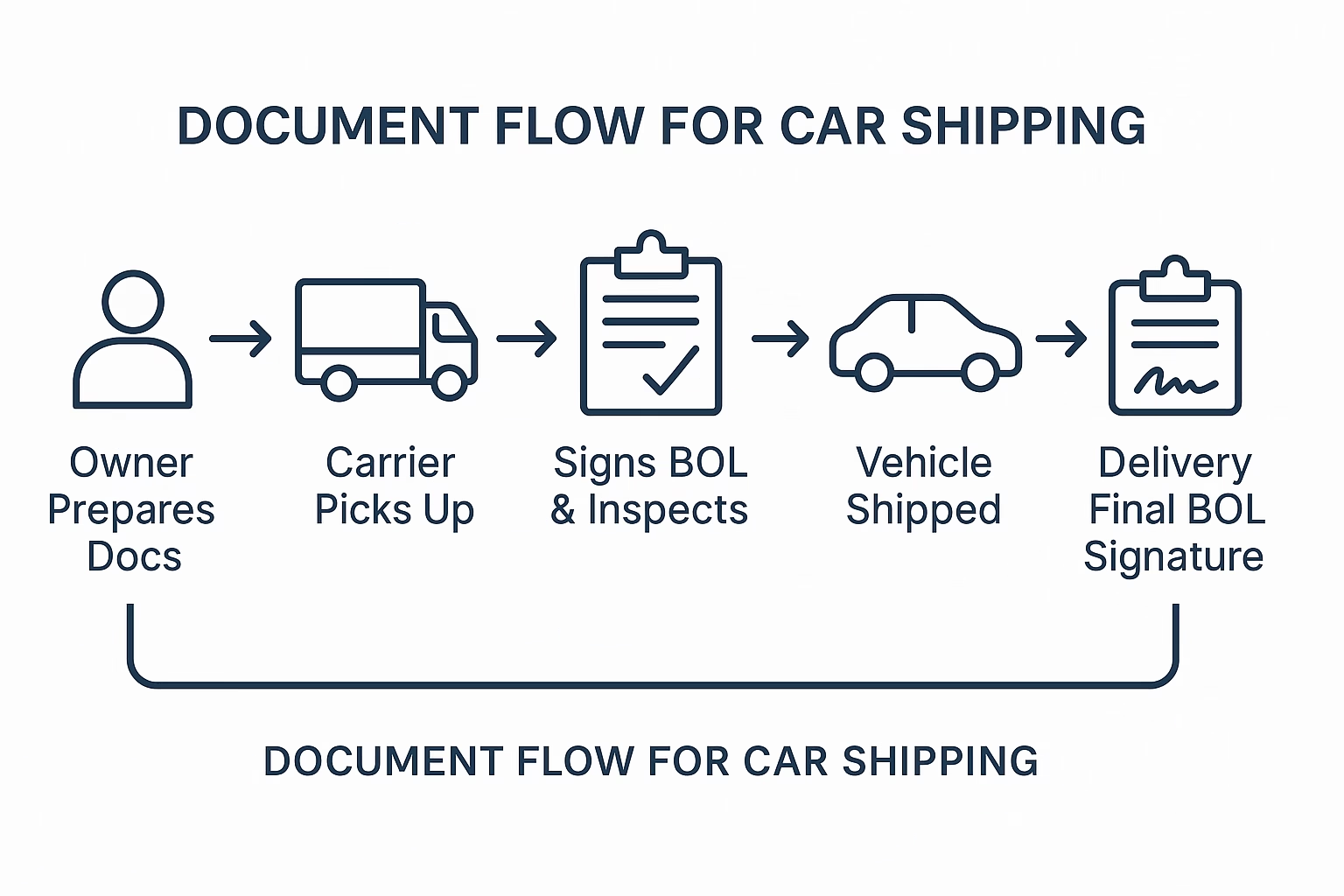
Why Documents Matter When Shipping a Car to Another State
Shipping a car across state lines is a regulated process — but most of that regulation sits with the carrier, not with you. Auto carriers must be FMCSA-licensed and carry active cargo insurance, and it is the carrier’s compliance, not your paperwork, that makes a shipment legal.
What documents do for you is a different question, and it is worth understanding before you start gathering things you do not need. One document carries almost all the weight: the Bill of Lading. It is the contract, the receipt and the vehicle condition report at once, signed by both parties at pickup and again at delivery — and it is the evidence any damage claim rests on. Get that one right and you are protected.
The delays people blame on paperwork are usually something else entirely: a wrong pickup address, a phone number nobody answers, or a vehicle that will not start when the driver arrives and was never declared inoperable when the quote was booked. Those genuinely stall shipments. A missing registration card almost never does.
So the useful question is not “what paperwork am I legally required to produce” — it is “what should I have ready so that nothing stalls.” The rest of this guide answers that, starting with the one document you genuinely cannot ship without.
For routes and pricing across any corridor, see our full state-to-state car shipping guide.
Core Documents Actually Required for Interstate Car Shipping
For domestic interstate car shipping, the paperwork is far lighter than most people expect. Carriers need one document to move your vehicle: the Bill of Lading, which doubles as the vehicle condition report.
Everything else is optional. Title, registration, proof of insurance and photo ID are not legal requirements for shipping a car to another state. An individual carrier may ask for them, and internal insurance paperwork or personal ID can be useful to have on hand — but that is carrier preference, not a federal obligation.
Here’s what you actually need:
🧾 1. Vehicle Condition Report / Bill of Lading (BOL)
-
Always required by carriers to document vehicle condition and as a receipt.
-
Functionally serves as both a contract and proof of agreement.
-
Signed by both parties at pickup and delivery.
🧩 2. Insurance Terms and Conditions
-
Carriers are required to carry cargo insurance; you as the private shipper don’t need to show proof of personal auto insurance.
-
It’s strongly recommended that you maintain your own policy for uncovered events (e.g. Acts of God like hail damage).
📄 3. Optional Documents (Based on Carrier or Special Circumstances)
-
Vehicle Title or Registration: Rarely asked—some carriers request it if there are financing liens or cross-country needs.
-
Photo ID: Not legally required; some carriers may request a driver’s license to verify identity.
-
Lienholder Authorization or Power of Attorney: Only required if someone else is handling the transport or the car is financed. Rarely needed unless shipping from/to a port state (e.g., Hawaii).
⚡ Quick Comparison Table
| Document |
Required? |
Notes |
| Bill of Lading / Condition Report |
✅ Always Required |
Driver issues this at pickup and delivery. |
| Carrier’s Cargo Insurance Info |
✅ Always Present |
Carriers must be insured; you don’t need to show proof. |
| Title / Registration |
⚠️ Rarely Required |
Only if carrier requests or special scenarios arise. |
| Proof of Personal Insurance |
❌ Optional |
Recommended for personal safety and risk coverage. |
| Valid Photo ID |
❌ Optional |
May be requested but not enforced. |
| Lien Authorization / POA |
⚠️ Conditional |
Required only in specific cases. |
🎯 Why Do Many Customers Think They Need Full Paperwork?
Because some informational articles mention title, registration, insurance, and IDs as “commonly asked documents.” However, in practice, none of those are mandatory for legal transport unless your carrier has specific internal policies.
-
If you ship your car from Hawaii or internationally, different documentation rules apply, including customs forms, title, and lien release paperwork.
-
Carriers may request additional documents to manage liability, financing conditions, or identification—but this is a preference, not a regulation.
Optional but Helpful Documents
While most auto shipping companies do not legally require much paperwork beyond the Bill of Lading, there are a few optional documents that can come in handy — especially in unique situations like third-party pickups or when your car is financed.
These aren’t needed for most standard state-to-state shipments but may help avoid delays or miscommunication.
📝 1. Power of Attorney (POA)
If someone else will be present for pickup or delivery, a notarized Power of Attorney allows them to act on your behalf. This is useful if:
-
You’re unavailable to meet the driver in person
-
The vehicle is being shipped for someone else (e.g., a student, military family member)
Some carriers may require POA for liability purposes when the shipper and signer aren’t the same person.
🔐 2. Lienholder Authorization Letter
If your car is leased or financed, and especially if you’re shipping to or from a port state (e.g., Hawaii, Alaska), your carrier might ask for a letter from your lender authorizing the shipment. This ensures the lienholder approves moving the vehicle across state lines. Navi itself doesn’t require any of this — see how shipping a financed or leased car actually works.
🧾 3. Vehicle Inspection Report (Third Party)
Though a carrier will inspect your vehicle and issue a condition report at pickup, some customers prefer to get a third-party inspection before shipment. This can provide:
If it ever comes to that, here’s exactly what to do if a vehicle is damaged during shipping — step by step, from the delivery inspection to the payout.
🧍♂️ 4. Photo ID (Driver’s License)
Not required by law, but some carriers may request it to verify your identity — particularly for high-value vehicles or if you’re paying with a card.
⚠️ Note:
These documents are not mandatory, but some shippers or carriers may request them depending on:
-
Vehicle ownership status (leased vs. owned)
-
Who is signing at pickup/delivery
-
Port or international shipping rules
What to Do Before Shipping Your Car
Whether you’re shipping a daily driver, a classic vehicle, or a family car across the country, proper prep is key to avoid last-minute issues, surprise charges, or disputes with the carrier. Here’s exactly what to do before getting your car shipped to another state. And if you’re new to the whole process, our step-by-step guide on how to ship a car walks through all 7 steps — from first quote to delivery-day inspection.
✅ Pre-Shipment Checklist
🧽 1. Clean Your Vehicle (Inside and Out)
📸 2. Take High-Quality, Timestamped Photos
-
Snap photos of all angles, including close-ups of wheels, bumpers, hood, and roof.
-
These serve as proof of pre-shipping condition in case of any damage.
⚙️ 3. Inspect Mechanical Condition
-
Ensure your car starts, steers, and rolls — especially if it’s being transported via open trailer.
-
Check for fluid leaks, low tire pressure, and battery issues.
-
If your vehicle is inoperable, inform the carrier in advance (fees may apply).
⛽ 4. Keep 1/4 Tank of Fuel or Less
🔑 5. Secure or Remove Accessories
-
Remove toll tags, parking passes, spoilers, roof racks, or antennas that could be damaged or cause issues during transport.
📝 6. Prepare for Paperwork
-
Be ready to review and sign the Bill of Lading (BOL) at pickup.
-
Optional: Have a copy of your photo ID, Power of Attorney (if someone else is signing), or lienholder letter ready if requested.
📞 7. Confirm Details with the Carrier
-
Double-check pickup and delivery addresses, contact numbers, and time windows.
-
Ask if they need any specific optional documents or vehicle handling instructions.
Planning to leave belongings in the vehicle? Read the rules first: shipping a car with personal items inside.
What Happens at Pickup and Delivery
Once the carrier takes possession of your car, most of the heavy lifting is done — but knowing what happens at pickup and delivery ensures you’re protected and informed at every step.
🚚 At Pickup
✅ 1. Vehicle Inspection + Bill of Lading (BOL)
The carrier will perform a full walkaround of your vehicle and note any visible damage on the Bill of Lading (BOL). This document is:
You’ll review it, agree to the condition notes, and sign to release the car for transport.
🪪 2. POA or ID (If Applicable)
If someone else is handing off the vehicle (like a family member), they may be asked to provide a Power of Attorney or photo ID, depending on the carrier’s policy.
🛣️ During Transit
Your vehicle is now in motion, and while you’re not physically involved, staying informed is key.
🌐 Real-Time Order Tracking
With Navi Auto Transport, you get:
-
A dedicated tracking page, available 24/7, where you can check the real-time status of your shipment
-
Updates include estimated arrival, driver location (if available), and delivery windows
💬 24/7 Live Chat Support
Got a question during transit? Navi also offers 24/7 live chat on their website, so you’re never left in the dark — even on weekends or after hours.
📦 At Delivery
🔄 1. Final Inspection
When your vehicle arrives, the driver will do a final walkaround and compare it to the original BOL.
-
If you spot any new damage, note it on the BOL before signing.
-
Take photos immediately and start a claim if needed.
✍️ 2. Sign Final BOL
Once the vehicle is verified, you’ll sign the final Bill of Lading, confirming successful delivery.
⚠️ Pro Tip: Never rush through the delivery inspection. Take your time and document everything — even minor issues.
Frequently Asked Questions
These are the most common questions customers ask when preparing to ship a car across state lines. Knowing the answers upfront can save you time, money, and confusion.
❓ 1. What documentation is needed to ship a car to another state?
For most standard U.S. shipments, the only required document is the Bill of Lading (BOL) — provided by the carrier at pickup and signed again at delivery.
You usually don’t need a title, registration, or insurance documents unless requested for special scenarios (e.g., port shipping, POA).
❓ 2. Do I need car insurance to ship my vehicle?
Not legally required, but strongly recommended.
❓ 3. What is the Bill of Lading and why is it important?
The Bill of Lading is the most important shipping document. It:
-
Confirms vehicle condition at pickup and delivery
-
Serves as a legal transport contract
-
Is required to file any damage claims
Never sign it until you’ve thoroughly inspected the vehicle.
❓ 4. How much does it cost to get a car shipped to another state?
Prices vary by:
Average cost: $500–$1,500
Use Navi Auto Transport’s online quote system for instant, accurate pricing.
❓ 5. Can I track my car during transit?
Yes — with Navi Auto Transport, you can:
Ready to ship your car?
Navi’s state to state car shipping service is door-to-door, fully insured, with 24/7 live tracking. Not sure on price yet? Get an instant estimate with our car shipping cost calculator.
