
Motorcycle Transport Snapshot
The Service
Motorcycle shipping handled by carriers who actually know bikes
Soft-strap loading, wheel chocks, no fork compression — the details that separate motorcycle haulers from car haulers running a side gig
Motorcycle transport is a different operation than car shipping. Bikes get strapped at the frame or triple clamps using soft-loop straps — never ratcheted down on the suspension, which causes fork compression damage that shows up weeks later as bad seals. They get held in wheel chocks or specialized cradles to stay upright. And they get assigned to carriers who run this work full-time, not to a car hauler taking a one-off motorcycle to fill an empty slot.
Most motorcycle owners ship enclosed. Bikes are more exposed than cars on an open trailer — single point of failure on weather, debris, and road salt. Enclosed runs about 30–40% more than open, but for a vehicle with no body panels protecting drivetrain or electronics, that math usually wins. We'll lay both options out below and let you choose.
This page covers what motorcycle shipping actually costs, when open is fine versus when enclosed is worth it, how we vet every carrier before they touch your bike, and the specific gear and policies that protect your shipment. Shipping a car too, or comparing methods? See open car transport, enclosed auto transport, door-to-door delivery, and inoperable vehicle shipping.
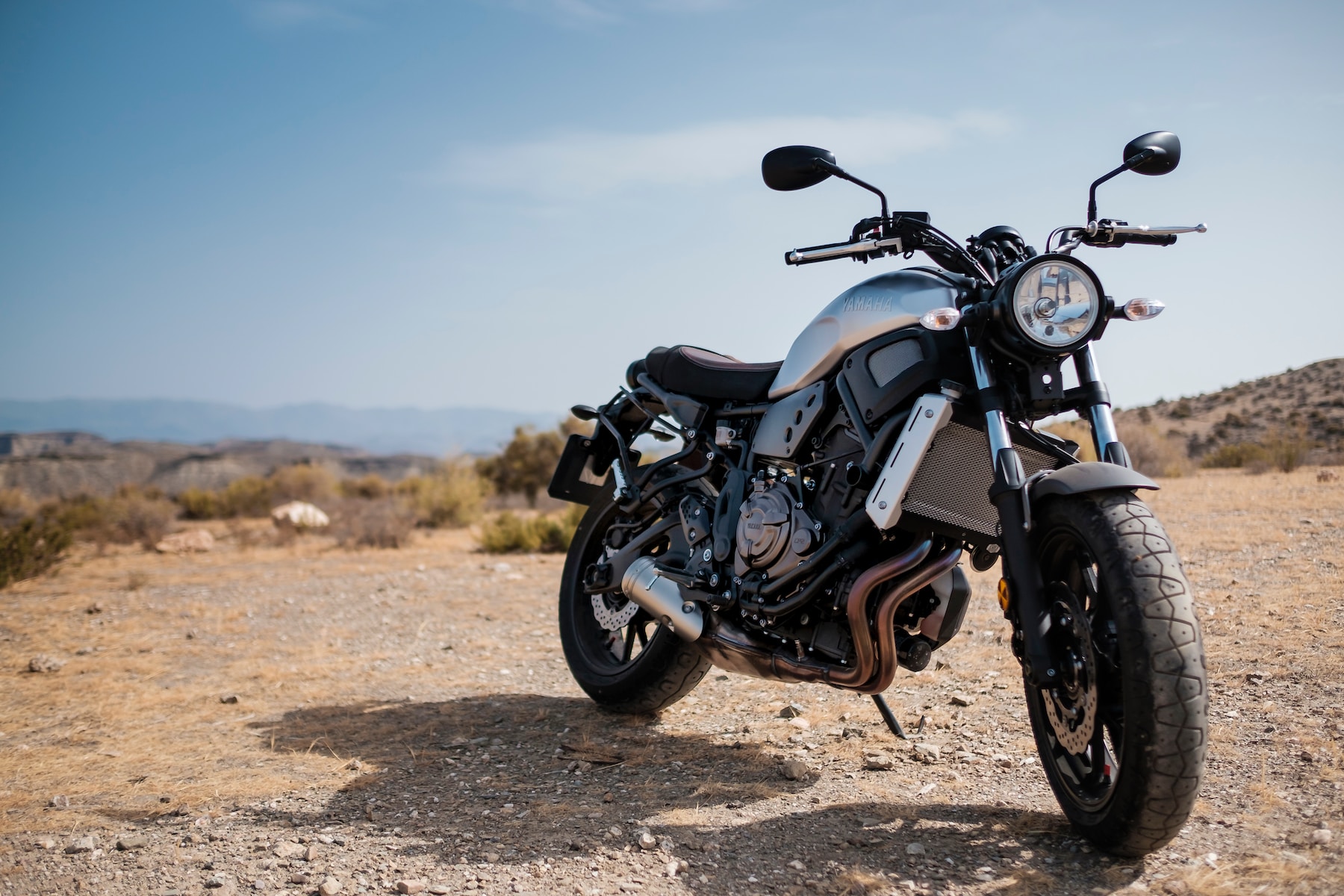
Soft-strap secured · Wheel chock loaded
Quick Decision
Open or enclosed motorcycle transport — the 30-second answer
For motorcycles, enclosed is the default. Open is the budget option when the bike can take it.
Head to Head
Open vs enclosed motorcycle transport
Side-by-side on what changes between the two options
The Process
How motorcycle shipping works
4 steps from quote to delivery — no calls required to get a price
Transparent Pricing
What motorcycle shipping actually costs
Per-mile rates drop as distance grows — the same logic as car shipping, scaled to a smaller footprint
Motorcycle shipping is priced per mile, but the per-mile rate steps down sharply as distance increases. Carrier fixed costs — fuel, driver pay, equipment — spread across more miles on long-haul loads. Short hops carry the highest per-mile rate because the fixed costs concentrate.
Enclosed motorcycle transport — per-mile rate by distance
Open transport runs roughly 30–40% less than the enclosed rates above. A 650-mile open transport hop typically prices around $599–$649. A coast-to-coast open transport move runs around $799–$899. Use the quote calculator for exact pricing on your route.
What changes the price on a motorcycle shipment
- Bike size and weight. Standard sportbikes, naked bikes, and most cruisers price at the baseline rate. Touring bikes (Goldwings, Road Glides), trikes, and adventure bikes with hard luggage take more deck space and add to the rate.
- Open vs enclosed. Enclosed runs 30–40% more than open for the same route. Most motorcycle owners ship enclosed, especially on long-haul routes through weather corridors.
- Pickup and delivery location. Within 30 miles of a major interstate, your pickup is priced standard door-to-door. Beyond 30 miles, expect a $50–100 surcharge for the carrier's deadhead miles.
- Season. Sturgis (early August), Daytona Bike Week (March), and snowbird traffic (Northeast/Midwest ↔ Florida and Arizona) drive demand spikes and can push prices 10–20% higher in peak weeks.
- Sidecar. Sidecar shipments add $150–250 depending on the sidecar size. Detached sidecars can ship separately.
- Condition. Operable bikes roll on and off. Non-running bikes require winch loading or forklift, which limits which carriers can take the load and adds to the rate.
- Booking lead time. Booking 5–7 days ahead usually beats next-day rates. Last-minute loads force carriers to deviate from planned routes.
Carrier Vetting
How we vet every carrier before they touch your bike
6 checks. No exceptions. A car hauler that doesn't run motorcycle equipment doesn't get the load.
After 10+ years in this industry, here's what we've learned about motorcycle damage claims: most happen because the carrier didn't have proper bike equipment. They ratchet-strapped suspension down for 2,000 miles and blew fork seals. They used hard hooks on plastic fairings. They loaded with car ramps instead of bike chocks. These are the operator-level details that decide whether your bike arrives in the same condition it left.
A carrier that fails any one of these doesn't get your load. The first check — motorcycle-specific equipment — is the one car-only haulers fail. This is why most motorcycle damage claims in the industry never happen on Navi shipments.
Coverage
Motorcycles we ship
Every motorcycle type has its own loading method, securing pattern, and price profile
Honest Take
When motorcycle shipping isn't the right call
A few cases where we'll suggest you ride or wait — before you book
For high-value or fragile builds, enclosed transport is the right call — costs more, but a paint repair on a one-off build costs more than the upcharge.
Customer Reviews
What motorcycle owners say about shipping with Navi
Recent reviews from customers who shipped bikes with us
Ready to ship your motorcycle?
Avg Pickup: 1–3 Days · From $399 · No upfront payment · All 50 states
FAQ
Frequently asked questions
Direct answers to the most common motorcycle shipping questions
How much does it cost to ship a motorcycle?
Enclosed motorcycle transport runs $0.43–$1.45 per mile, with the rate stepping down on longer routes. Real examples: a 650-mile move runs about $942. A 1,250-mile move is around $1,062. Coast-to-coast (2,850 miles) runs about $1,255. Open transport runs 30–40% less for the same routes.
Can I ship a motorcycle on an open carrier?
Yes, but only with carriers who run motorcycle-specific equipment — wheel chocks, soft straps, and proper ramps or liftgates. Open transport is usually 30–40% cheaper than enclosed and is fine for daily-ridden bikes, dirt bikes, or short routes. Enclosed is the better call for high-value bikes, customs, classics, or long-haul routes through bad weather.
How is a motorcycle secured on the trailer?
Properly trained carriers use soft-loop straps attached to the frame or triple clamps — never to handlebars, fairings, or other fragile parts. A wheel chock or specialized cradle holds the front tire in place to keep the bike upright. The most common damage cause in motorcycle shipping — fork compression — happens when inexperienced haulers ratchet straps down on the suspension. We screen for proper equipment and securing methods before assigning a carrier.
Do I have to crate the motorcycle myself?
No. Standard motorcycle transport is roll-on/roll-off — you don't need to crate the bike. Just unlock the steering, leave about a quarter tank of fuel, and the driver will handle loading using professional liftgates or ramps. Crating is optional for additional protection on enclosed shipments but not required.
How long does motorcycle shipping take?
Pickup happens within 1–3 days of booking. Transit time depends on distance: under 500 miles takes 1–3 days, mid-distance (500–1,500 miles) takes 3–5 days, coast-to-coast routes take 7–9 days. Enclosed motorcycle shipments can add 1–2 days to the pickup window because enclosed carriers are less common.
Can I ship personal items with my motorcycle?
No. Unlike cars, motorcycles have no enclosed cargo area, and DOT regulations prohibit carriers from transporting loose personal items. Helmets, jackets, riding gear, and detached accessories all need to be removed before pickup. Hard-mounted accessories like permanent saddlebags or fairings stay on. If you need to ship gear with the bike, ship it separately via standard freight.
Can I track my motorcycle in real time?
Yes. Every Navi shipment includes real-time GPS tracking through Navi Track 360™. You get pickup and delivery ETAs, location updates throughout transit, and direct access to support, all tied to your order — without having to chase the driver for status.
What insurance covers my motorcycle during transport?
Carrier cargo insurance covers damage caused by the carrier during transport. Open carriers typically carry $100,000–$250,000 in cargo coverage. Enclosed carriers carry $250,000–$1,000,000. We verify active insurance on every assigned carrier before they're cleared to haul your load. Certificates of insurance are available on request.
Can you ship a motorcycle with a sidecar?
Yes. Sidecar rigs ship with the same vetting and securing standards as any other motorcycle. Depending on the sidecar size, expect a $150–250 surcharge on top of the base motorcycle rate. Standalone sidecars (without the motorcycle) can also ship separately as a single unit.
What if my bike doesn't run?
Non-running motorcycles can still ship, but they require winch loading or forklift, which limits which carriers can take the load. Expect a surcharge for inoperable bikes. We use the same vetting and securing standards. Flag the condition at booking so we match the right carrier.
How far in advance should I book?
Book 5–7 days ahead for the best rate. Last-minute loads force carriers to deviate from planned routes, which costs more. For peak event weeks (Sturgis early August, Daytona Bike Week early March) or snowbird season (October–November and March–May), 10–14 days ahead is better. Expedited motorcycle pickup is available at 50–100% above standard rate.
Do I need to be there for pickup and delivery?
You or someone you authorize (18 or older) needs to be present at both pickup and delivery to do the inspection walkaround, sign the Bill of Lading, and confirm bike condition. The pre-shipment inspection is the baseline against which any damage claim is filed — skip it and any claim becomes a difficult conversation.