
Comparing car shipping quotes sounds simple — until you actually do it. One company quotes $650, another $1,050, and both promise “door-to-door service” and “fast pickup.” At that point, most people assume the cheaper quote is the better deal.
That’s usually where problems start.
The truth is, car shipping quotes are not standardized, and the lowest price often leads to delays, last-minute price increases, or even canceled shipments. This guide explains how to compare car shipping quotes the right way — so you understand what you’re paying for, avoid low-ball traps, and book with confidence.
Summary
Why Car Shipping Quotes Vary So Much
If you’re seeing large price differences for the same route, that’s normal — but it’s not random. Car shipping quotes vary because companies calculate pricing very differently.
Broker Pricing vs. Real Carrier Rates
Most auto transport companies are brokers, not truck owners. That means they don’t move your car themselves — they post your shipment to a national carrier network and match it with a driver.
Here’s where quotes diverge:
-
Low quotes are often based on marketing price, not real carrier demand
-
Accurate quotes are based on what drivers are actually accepting right now
If a quote doesn’t include realistic carrier pay, no driver will take the job. When that happens, the broker comes back asking for more money — or your car simply doesn’t move.
Market Demand, Route, and Timing Matter
Car shipping is a live market, similar to airline tickets or freight logistics. Pricing changes based on:
-
Distance and route popularity
-
Urban vs rural pickup or delivery
-
Time of year (summer and snowbird season cost more)
-
How flexible your pickup window is
For example:
-
Los Angeles → Dallas with flexible dates = lower cost
-
Rural Montana → Florida with a 2-day window = higher cost
Quotes that ignore these realities are usually placeholders, not real prices.
For exact numbers by distance, our car shipping cost by distance guide shows what fair pricing looks like across different route lengths.
Pickup Windows vs “Guaranteed” Promises
Another major difference between quotes is how pickup timing is presented.
A realistic quote will offer:
-
A pickup window (ex: 1–3 days, 3–7 days)
-
Clear expectations based on carrier availability
A risky quote often promises:
-
“Guaranteed pickup” with no explanation
-
Same-day pickup at a bargain price
In reality, guaranteed pickup requires higher carrier pay. If that cost isn’t reflected in the quote, the guarantee isn’t real.
Why Two Legit Companies Can Still Be $300 Apart
Even when both companies are honest, prices can differ because:
-
One uses real-time carrier data
-
Another uses static pricing models
-
One prices aggressively to win the booking
-
Another prices to ensure delivery without renegotiation
The key isn’t choosing the lowest or highest quote — it’s choosing the one that aligns with how the market actually works.
Key Takeaway (Very Important)
If a quote looks unusually cheap, ask yourself one question:
Does this price make sense for a driver to accept it today?
If the answer is no, the quote isn’t real — it’s just the opening move.
Cheapest Quote vs Best Value (This Is Where Most People Get It Wrong)
When comparing car shipping quotes, it’s natural to focus on the number at the bottom. But in auto transport, cheapest rarely means best — and often doesn’t even mean cheapest in the end.
Here’s how to think about it the right way.
Why the Cheapest Quote Often Costs More Later
Low quotes usually rely on one assumption: you’ll agree to raise the price later.
This typically plays out like this:
-
You book a very low quote
-
Days pass with no carrier assigned
-
You get a call or email saying:
-
“Drivers aren’t accepting this price”
-
“We need to increase the carrier pay”
-
“Market conditions changed”
-
At that point, you’ve already waited, adjusted your schedule, and mentally committed — so many customers agree to pay more just to move forward.
What looked like savings upfront turns into:
-
Delays
-
Stress
-
A final price that’s higher than a realistic quote would’ve been
What “Best Value” Actually Means in Car Shipping
Best value doesn’t mean overpaying. It means choosing a quote that balances price, speed, and reliability.
A high-value quote usually includes:
-
Realistic carrier pay from the start
-
Faster carrier assignment
-
Clear pickup windows
-
Little to no renegotiation
-
Honest communication when market conditions shift
In practice, best-value quotes:
-
Get picked up sooner
-
Cost what they say they’ll cost
-
Reduce the chance of cancellations or re-posting
The Hidden Cost of “Waiting for a Better Deal”
Some customers book a low quote hoping a driver will accept it eventually.
The risk?
-
Your car sits while better-paying loads move first
-
Your pickup window expires
-
Prices often rise as urgency increases
Carriers choose loads that make sense for their route and time. A realistic price moves; an unrealistic one waits.
How to Identify the Best-Value Quote Quickly
When comparing quotes side by side, ask these questions:
-
Does this price align with current market conditions?
-
Is the pickup window realistic or overly optimistic?
-
Has the company explained why the price is what it is?
-
Are they confident the price will hold?
If a company educates you instead of pushing you to “lock it in now,” that’s usually a strong sign.
Simple Rule to Remember
Remove the lowest outlier.
Then choose the quote that feels the most realistic and clearly explained.
That’s almost always the one that delivers without drama.
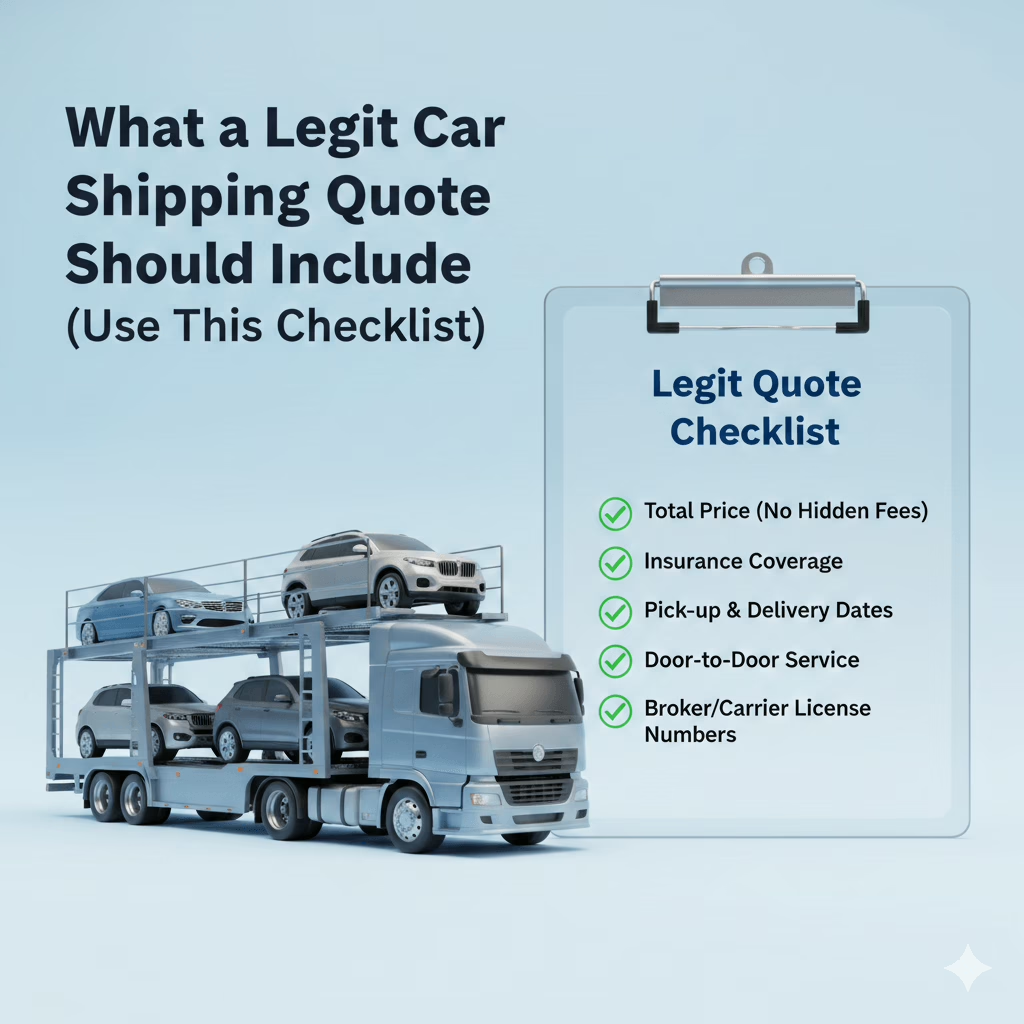
What a Legit Car Shipping Quote Should Include (Use This Checklist)
Not all quotes are created equal. Two companies can quote the same route and still be offering completely different levels of service and risk.
This checklist helps you compare quotes apples-to-apples — and spot problems before you book.
1. Total Price (Is It Actually All-In?)
A legitimate quote should clearly answer one question:
Is this the full price I’m expected to pay?
Watch for:
-
“Estimated” pricing with no explanation
-
Prices that exclude carrier pay
-
Vague language like “subject to market conditions” without details
A transparent quote explains:
-
What’s included in the price
-
When (and why) a price could change
-
How carrier pay was calculated
If you don’t know what you’re paying for, you’re not comparing real quotes.
2. Deposit & Payment Structure
Always understand how and when money changes hands.
A solid quote clearly states:
-
Deposit amount
-
When the deposit is charged
-
When the remaining balance is due
-
Accepted payment methods
Red flags 🚩:
-
Large, non-refundable deposits
-
Pressure to pay immediately
-
No written confirmation of payment terms
Good companies have clear, boring payment rules — that’s a good thing.
3. Pickup Window (Not Just a Pickup Date)
Car shipping works in pickup windows, not exact dates.
A legitimate quote offers:
-
A realistic window (ex: 1–3 days, 3–7 days)
-
Flexibility options that affect price
Be cautious if a quote promises:
-
Same-day or next-day pickup at a very low price
-
“Guaranteed pickup” without explaining the added cost
Real guarantees cost more — and honest quotes reflect that.
4. Transport Type (Open vs Enclosed, Door-to-Door vs Terminal)
Make sure you’re comparing the same service:
-
Open transport services (most common, lowest cost)
-
Enclosed transport services (premium, protected)
-
Door-to-door (standard for most routes)
-
Terminal-to-terminal car shipping (rare, often inconvenient)
If one quote is cheaper, double-check:
-
It’s not switching transport type
-
It’s not using terminal delivery by default
5. Communication & Accountability
This part matters more than most people realize.
Ask yourself:
-
Did they explain pricing clearly?
-
Did they answer questions directly?
-
Do you have a real point of contact?
Companies that rush you to book often disappear when problems arise.
Companies that explain the process upfront usually manage it better end-to-end.
Quick Summary Checklist
Before booking, you should know:
-
✅ Final price vs estimate
-
✅ Deposit amount & refund policy
-
✅ Pickup window (not just a date)
-
✅ Transport type
-
✅ Who to contact if something changes
If any of those are unclear, the quote isn’t complete.
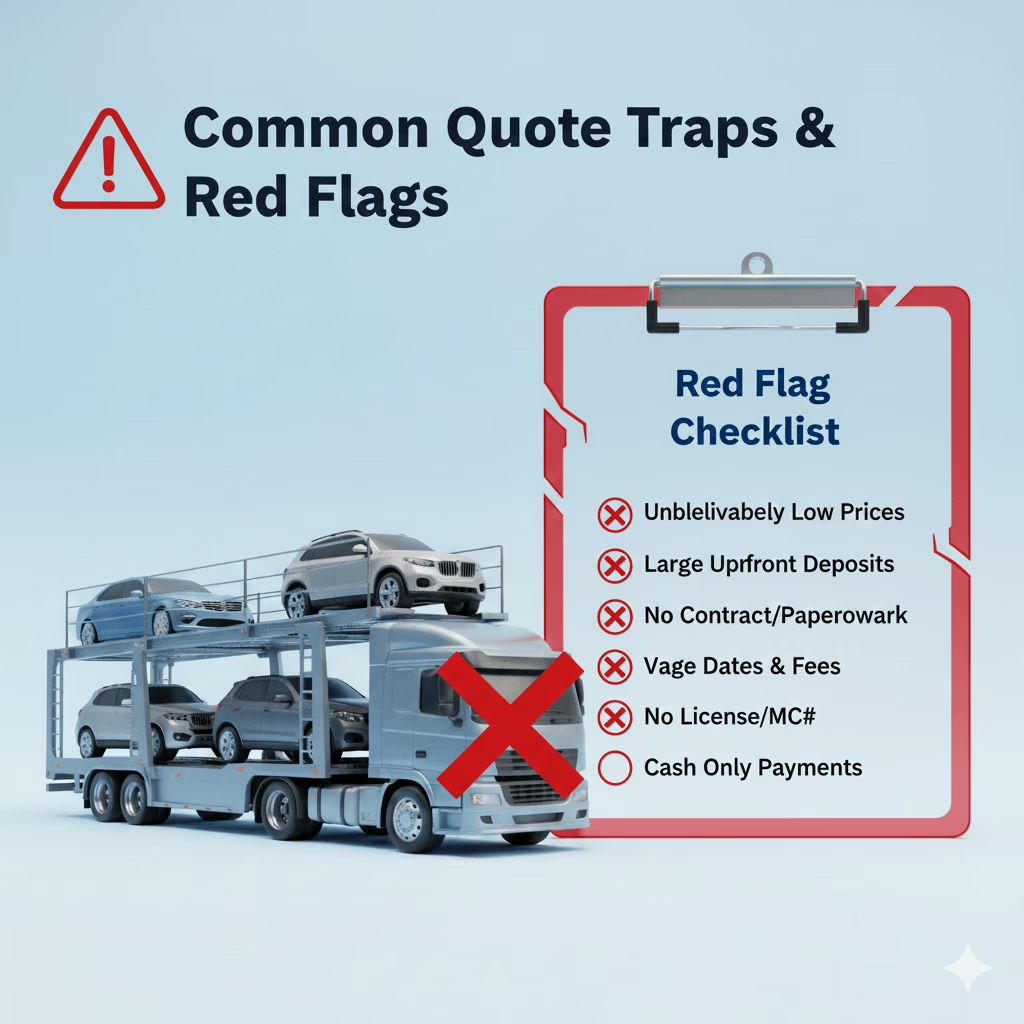
Common Quote Traps & Red Flags (Avoid These Mistakes)
Some car shipping quotes look great on the surface — until your car doesn’t move, the price changes, or communication suddenly disappears. These issues are almost always predictable if you know what to look for.
Here are the most common quote traps and how to avoid them.
1. “Too Good to Be True” Pricing
If one quote is dramatically lower than all the others, it’s rarely a lucky deal.
What usually happens:
-
The price isn’t high enough to attract a carrier
-
Your shipment sits unassigned
-
You’re asked to increase the price later
A realistic quote stays within a reasonable range of the others. Extreme outliers are almost always a warning sign.
2. No Real Pickup Timeline
Vague promises like:
-
“ASAP pickup”
-
“Should be picked up soon”
-
“We’ll find someone”
…usually mean there’s no actual plan.
Legitimate quotes include:
-
A defined pickup window
-
An explanation of how quickly a carrier is expected to accept
If timing matters to you, clarity matters even more.
3. Fake or Misleading “Guaranteed Pickup”
Guaranteed pickup is a real service — but it costs more.
Red flag:
-
A very low quote with a “guaranteed” promise
-
No explanation of how the guarantee works
If carrier pay doesn’t increase, the guarantee doesn’t exist.
4. Pressure to Book Immediately
High-pressure tactics are a sign the company cares more about locking you in than delivering your car.
Watch out for:
-
“This price is only good today”
-
“You’ll lose your spot if you don’t book now”
-
Refusal to put terms in writing
Reputable companies educate first and let you decide.
5. Poor Communication Before Booking
How a company communicates before booking is usually how they’ll communicate after.
Warning signs:
-
Dodging direct questions
-
Overpromising instead of explaining
-
No clear point of contact
If it’s confusing now, it will be worse later.
Fast Rule for Spotting Red Flags
If a quote:
-
Is much cheaper than the rest
-
Has unclear timing
-
Requires fast commitment
-
Avoids written confirmation
…walk away.
How to Compare Car Shipping Quotes Step-by-Step
If you’re looking at multiple quotes and don’t want to overthink it, use this simple process. It filters out bad options fast and leaves you with the safest choice.
Step 1: Remove the Lowest Outlier
Line up all your quotes and immediately remove the one that’s significantly cheaper than the rest.
If most quotes are between $950–$1,100 and one is $650, that quote isn’t a bargain — it’s a problem waiting to happen.
Step 2: Compare Pickup Windows
Now look at timing, not price.
Ask:
-
Which quotes offer realistic pickup windows?
-
Which ones sound vague or overly optimistic?
A 3–7 day window at a fair price usually beats a “guaranteed tomorrow” promise that doesn’t explain how it works.
Step 3: Check Price Stability
Ask each company one direct question:
“Is this price based on current carrier demand, and how often does it change after booking?”
You’re looking for confidence and clarity — not deflection.
Step 4: Review Deposit & Refund Terms
Make sure you understand:
-
When you pay
-
How much you pay
-
Whether it’s refundable
If the terms feel complicated or rushed, that’s a signal.
Step 5: Evaluate Communication Quality
This step is underrated but critical.
Choose the company that:
-
Explains pricing instead of selling
-
Answers questions directly
-
Sets realistic expectations
In auto transport, communication quality is often a better predictor of success than price.
Step 6: Choose Balance, Not Extremes
Your best option is usually:
-
Not the cheapest
-
Not the most expensive
-
Clearly explained
-
Realistic about timing
-
Confident the price will hold
That’s the quote that gets your car picked up without drama.
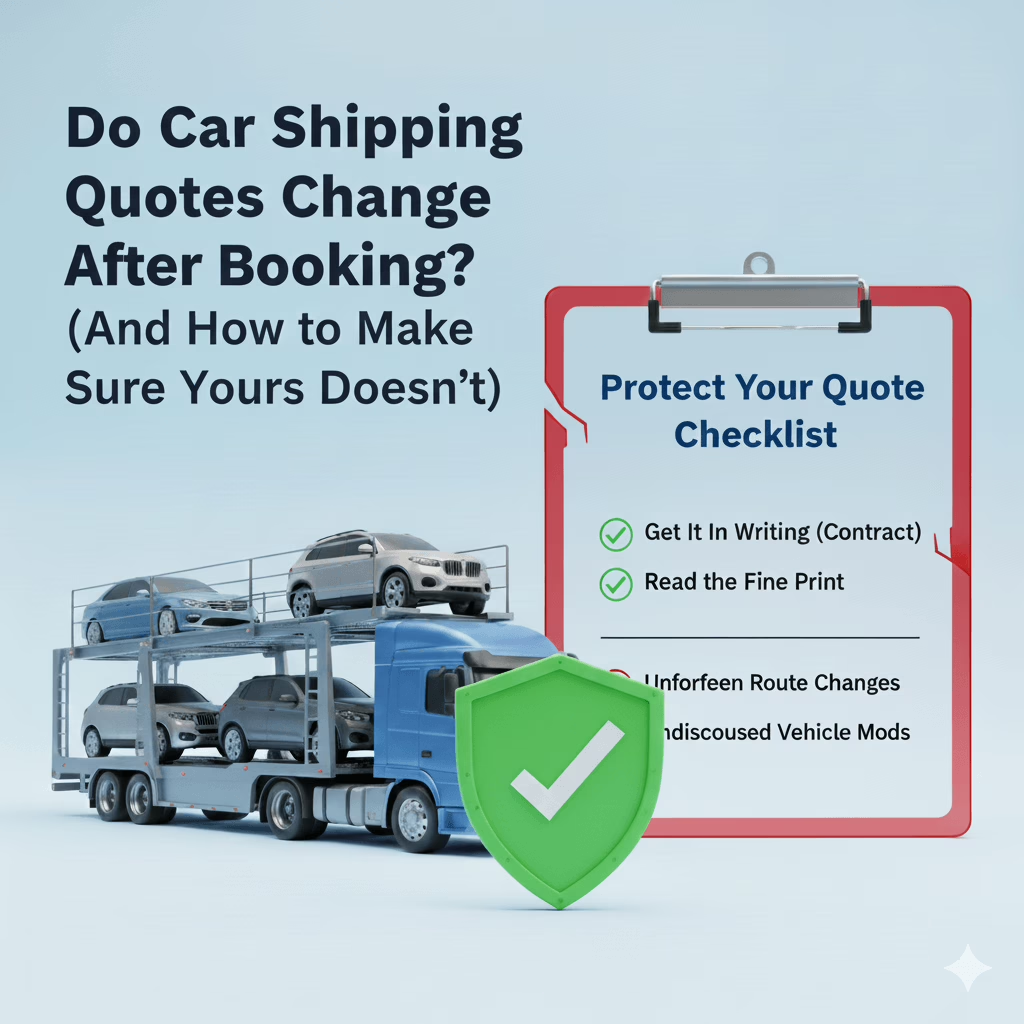
Do Car Shipping Quotes Change After Booking? (And How to Make Sure Yours Doesn’t)
Short answer: they shouldn’t — if the quote was done correctly.
But in the real world, some quotes do change, and knowing why makes all the difference.
When a Quote Changing Is a Red Flag
Most post-booking price increases happen for one reason:
the original quote didn’t reflect real carrier demand.
Common scenarios:
-
The carrier pay was set too low
-
The route or timing was underestimated
-
The quote was designed to win the booking, not move the car
When no driver accepts the load, the company comes back asking for more money — often days later, when you’re already waiting.
That’s not a market change. That’s a pricing mistake.
When a Price Change Can Be Legitimate (Rare Cases)
There are situations where adjustments can be reasonable, such as:
-
Extreme weather events
-
Sudden fuel spikes
-
Major route disruptions
-
Customer-requested changes (dates, locations, vehicle size)
The difference is transparency. A legitimate change is:
-
Explained clearly
-
Documented
-
Optional — not forced
If the explanation feels vague or rushed, it’s usually not legitimate.
How Transparent Brokers Prevent Price Changes
High-quality brokers price shipments using:
-
Current carrier rate data
-
Real-time supply and demand
-
Realistic pickup windows
That’s why companies like Navi Auto Transport focus on pricing integrity upfront — accounting for carrier pay from day one so renegotiation isn’t part of the process.
When pricing matches the market, drivers accept faster and quotes hold.
3 Questions That Protect You Before Booking
Ask these before you commit:
-
Is this quote based on current carrier demand for my route?
-
How often does this price change after booking?
-
What happens if a carrier doesn’t accept at this price?
Clear answers = lower risk.
Hesitation or deflection = warning sign.
What to Do If a Company Tries to Raise the Price
You have options:
-
Ask for proof of carrier offers
-
Request a revised pickup window instead of a price increase
-
Walk away if terms weren’t disclosed upfront
A quote that changes once can change again.
Broker vs Carrier Quotes — Which One Should You Trust?
When comparing car shipping quotes, many customers ask the same question:
“Should I book directly with a carrier or use a broker?”
The answer depends on availability, timing, and how much flexibility you need — but for most people, brokers are the safer and more reliable option when done right.
What a Carrier Quote Really Means
A carrier owns and operates the truck that moves your vehicle.
Pros:
-
No middle layer
-
Direct communication with the driver
Cons:
-
Very limited routes
-
Fixed schedules
-
Often unavailable when you need them
-
Hard to reach unless your route fits perfectly
Most carriers won’t quote unless:
-
Your route matches their current lane
-
Your dates align exactly
-
The price works for their schedule
If any of those change, the carrier simply passes.
What a Broker Quote Really Means
A broker connects your shipment to thousands of licensed carriers across the country.
Pros:
-
Access to a large carrier network
-
More flexible pickup windows
-
Better coverage for long-distance, rural, or time-sensitive routes
-
Backup options if one carrier falls through
Cons (with bad brokers):
-
Low-ball pricing
-
Weak communication
-
Price renegotiation
A good broker doesn’t guess pricing — they match it to real carrier demand so the shipment actually moves.
Why Most Successful Shipments Go Through Brokers
In practice:
-
Most individual carriers can only cover specific lanes
-
Brokers can reroute, reassign, and adapt
-
Brokers absorb complexity so customers don’t have to
That’s especially important if:
-
Your dates aren’t fixed
-
Your route isn’t major-to-major city
-
You need faster pickup
-
You want options if something changes
The Real Risk Isn’t Brokers — It’s Bad Pricing
Most horror stories aren’t about brokers vs carriers.
They’re about unrealistic quotes.
Problems happen when:
-
Carrier pay isn’t included
-
The quote is designed to “win the booking”
-
No backup plan exists
When pricing is realistic, brokers actually reduce risk, not increase it.
How to Decide What’s Right for You
Choose a carrier if:
-
You already found one on your exact route
-
Your dates are very flexible
-
You’re comfortable waiting
Choose a broker if:
-
You want speed and reliability
-
Your route or timing is specific
-
You want someone managing the logistics for you
Bottom Line
The best choice isn’t broker vs carrier — it’s realistic pricing vs wishful pricing.
A well-priced broker quote almost always beats a cheap carrier promise that never materializes.

Final Checklist Before Booking (Make the Smart Choice)
Before you book any car shipping quote, pause and run through this checklist. It takes less than a minute — and it can save you days of delays and hundreds of dollars.
Final Pre-Booking Checklist
You should clearly know:
-
✅ The total price
Is it final or an estimate? Does it include realistic carrier pay? -
✅ Pickup window
Is it a range (1–3 days, 3–7 days), not a vague promise? -
✅ Deposit & payment terms
When do you pay, how much, and is it refundable? -
✅ Transport type
Open vs enclosed, door-to-door vs terminal — no surprises. -
✅ Price stability
How often does this company raise prices after booking? -
✅ Point of contact
Do you know who to reach if something changes?
If any of these answers are unclear, the quote isn’t complete.
Why Transparency Wins Every Time
Car shipping doesn’t have to be stressful. Most problems come from unrealistic pricing, not from the process itself.
Companies that price honestly upfront:
-
Assign carriers faster
-
Avoid renegotiation
-
Communicate better
-
Deliver when they say they will
That’s why transparency matters more than finding the lowest number.
How Navi Fits Into Everything You’ve Learned
Everything in this guide reflects how Navi Auto Transport approaches pricing and dispatch:
-
Quotes are built around real carrier demand, not marketing numbers
-
Carrier pay is accounted for upfront, so drivers actually accept the load
-
Pickup windows are realistic, not overpromised
-
Price changes are the exception, not the expectation
-
AI-driven pricing and dispatch tools continuously analyze route demand, carrier availability, and market conditions to keep quotes accurate and shipments moving
The goal isn’t to win bookings with the lowest quote — it’s to use data and automation to move vehicles efficiently, transparently, and without surprises.
Get a Transparent Car Shipping Quote
If you want a quote that reflects today’s market, holds up after booking, and comes with clear communication:
Get Your Quote with Navi Auto Transport
Real carrier pricing • No low-ball tactics • No surprise increases
Frequently Asked Questions About Comparing Car Shipping Quotes
Why are car shipping quotes so different for the same route?
Because companies calculate pricing differently. Some use real carrier demand and current market data, while others advertise low marketing prices that don’t reflect what drivers will actually accept. Quotes based on unrealistic carrier pay usually lead to delays or price increases later.
Is the cheapest car shipping quote ever a good idea?
Rarely. The cheapest quote is often missing realistic carrier pay. When that happens, carriers skip the load and the company comes back asking for more money. A fair, market-based quote is usually cheaper in the end because it actually holds.
Do car shipping prices change after booking?
They shouldn’t — if the quote was priced correctly. Price changes usually mean the original quote didn’t match real market conditions. Legitimate changes are rare and typically tied to extreme events or customer-requested changes.
How can I tell if a car shipping quote is realistic?
A realistic quote:
-
Falls within the general range of other quotes
-
Includes a clear pickup window
-
Comes with a confident explanation of pricing
-
Doesn’t rely on urgency or pressure
If a company can explain why the price is what it is, that’s a good sign.
Is it better to book with a broker or a carrier?
For most people, a broker is the better option. Brokers have access to thousands of carriers and can adapt if something changes. The key is choosing a broker that prices based on real carrier demand, not one that low-balls to win bookings.
What questions should I ask before booking a car shipping quote?
Ask:
-
Is this price based on current carrier demand?
-
How often does this price change after booking?
-
What happens if no carrier accepts at this price?
Clear answers = low risk. Vague answers = red flag.
How does Navi handle pricing differently?
Navi Auto Transport uses AI-driven pricing and dispatch systems that analyze live carrier availability, route demand, and market conditions. This allows quotes to reflect what drivers are actually accepting — reducing delays and price changes after booking.
What’s the safest way to compare car shipping quotes?
Remove the lowest outlier, compare pickup windows and payment terms, and choose the quote that feels realistic and clearly explained — not the one that sounds too good to be true.