
Buying from Copart is exciting — until you realize shipping can completely change your total investment. Many buyers search for the cheapest shipping from Copart before bidding, but what most don’t realize is that the lowest quote isn’t always the lowest final cost.
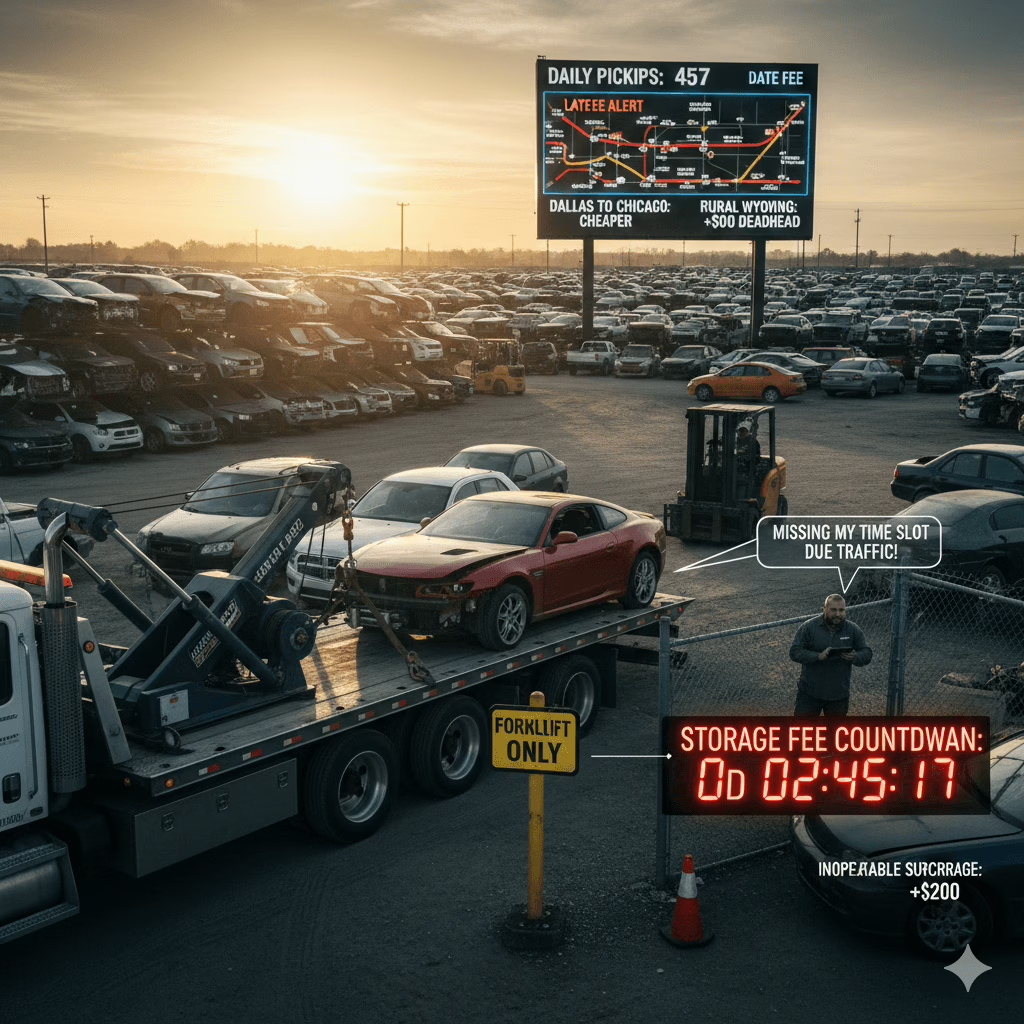
Copart auto transport pricing works differently than standard dealership vehicle shipping. Salvage cars, inoperable vehicles, auction yard congestion, and strict release windows all affect pricing. If pickup is delayed, Copart storage fees can start accumulating daily. If a carrier arrives without proper equipment for a non-running vehicle, additional fees may apply. And if a quote is “too cheap,” it may sit on a load board without ever getting dispatched.
The real question isn’t just who is cheapest — it’s who delivers the lowest total cost without delays or hidden charges.
This guide breaks down:
-
Real Copart shipping cost ranges
-
Running vs non-running price differences
-
Broker vs carrier pricing models
-
How to avoid auction transport mistakes
-
When “cheap” becomes expensive
Why Copart Shipping Costs Vary
Top Cost Drivers Ranked by Impact
1️⃣ Vehicle Condition (Running vs Inoperable)
2️⃣ Distance & Route Demand
3️⃣ Pickup Speed (Storage Fee Risk)
4️⃣ Seasonal Demand (Snowbird / Peak Months)
5️⃣ Carrier Availability at Auction Yard
Average Risk Increase if Delayed Pickup:
-
$50–$150 per day in potential storage fees
Summary
How Copart Shipping Pricing Really Works
Copart shipping pricing is not random — it follows a supply-and-demand model influenced by vehicle condition, route popularity, and auction logistics. Understanding how Copart auto transport is calculated helps you avoid underestimating your total project cost.
Unlike dealership vehicle moves, auction cars often require tighter pickup windows and specialized handling. Many are salvage or inoperable, which increases labor and equipment needs. Carriers price these loads based on risk, time at the yard, and reload potential after delivery.
Here’s what truly affects Copart shipping cost:
Distance-Based Pricing Structure
Transport pricing is primarily calculated per mile, but not in a straight line. Short routes typically have a higher per-mile rate, while long-distance shipments average lower per-mile costs due to carrier efficiency.
Typical Market Ranges (Open Car Carrier, Running Vehicles):
-
Under 300 miles → $400–$650
-
300–1,000 miles → $700–$1,200
-
1,000–2,000 miles → $1,100–$1,700
-
Cross-country (2,000+ miles) → $1,400–$2,200
Inoperable vehicle shipping cost can add $150–$400+ depending on winch access and yard conditions.
Vehicle Condition (Running vs Inoperable)
Salvage and non-running vehicles require winches or forklifts for loading. Not all carriers accept these loads. Fewer available trucks = higher pricing.
Running vehicle → standard open car carrier
Non-running vehicle → specialized loading + limited carrier pool
This is one of the biggest cost differences in ship car from Copart auction searches.
Auction Yard Congestion & Storage Fees
Copart locations can become congested, especially after large auction days. Carriers factor wait times into pricing. If pickup is delayed beyond Copart’s free window, storage fees may begin.
Delays can quickly eliminate any “cheap” savings.
Seasonal Demand & Route Popularity
Routes like:
-
Texas → Florida
-
California → Arizona
-
Illinois → Georgia
are heavily trafficked, often making them more competitive.
Less common lanes may cost more due to limited carrier traffic.
Pricing Formula
Base Rate (Distance)
+ Vehicle Condition Adjustment
+ Route Demand Factor
+ Timing Urgency
= Final Copart Shipping Rate
Get an Instant Copart Shipping Quote & Lock Your Price Today
Real Copart Shipping Cost Breakdown (2026 Market Data)
If you’re searching for the cheapest shipping from Copart, you need realistic numbers before placing a bid. Below is a transparent pricing breakdown based on current open-carrier market averages for auction vehicle transport.
These are estimated ranges for Copart car shipping rates and reflect standard conditions (non-rural delivery, flexible pickup, no extreme weather disruptions).
Under 300 Miles
Short-distance shipments usually have the highest per-mile cost.
Running vehicle: $400–$650
Inoperable vehicle: $550–$900
Short lanes often move fast, but limited truck capacity in some regions can raise pricing.
300–1,000 Miles
Most common distance bracket for auction buyers.
Running vehicle: $700–$1,200
Inoperable vehicle: $900–$1,500
This range includes many dealer-to-state relocations and rebuilder purchases.
1,000–2,000 Miles
Mid-to-long distance shipments benefit from better carrier efficiency.
Running vehicle: $1,100–$1,700
Inoperable vehicle: $1,350–$2,000
Longer routes often reduce per-mile rates, but fuel pricing and demand fluctuations matter.
Cross-Country (2,000+ Miles)
Coast-to-coast shipments are common among out-of-state buyers.
Running vehicle: $1,400–$2,200
Inoperable vehicle: $1,700–$2,600
Urban-to-urban routes (e.g., Los Angeles to Houston) are typically more competitive than rural deliveries.
Copart Shipping Cost Snapshot
| Distance | Running Vehicle | Inoperable Vehicle |
|---|---|---|
| < 300 mi | $400–$650 | $550–$900 |
| 300–1,000 mi | $700–$1,200 | $900–$1,500 |
| 1,000–2,000 mi | $1,100–$1,700 | $1,350–$2,000 |
| 2,000+ mi | $1,400–$2,200 | $1,700–$2,600 |
Inoperable = Higher Tier
Running = Base Tier
Flexible Timing = Lower Cost
Urgent Pickup = Higher Cost
Broker vs Carrier vs Copart Internal Shipping – Cost Comparison
When buyers search for the cheapest shipping from Copart, they usually compare three options: booking a direct carrier, using Copart’s internal delivery service, or working with a Copart transport broker. The price difference isn’t just about numbers — it’s about dispatch speed, flexibility, and total risk.
Understanding these models helps you avoid overpaying or choosing a quote that never gets picked up.
Direct Carrier Pricing
Booking a carrier directly can sometimes produce competitive rates — especially on popular lanes. However, most carriers operate regionally and do not service every Copart yard nationwide.
Pros:
-
Potentially lower rate on common routes
-
Direct communication
Cons:
-
Limited coverage
-
No backup carrier if truck cancels
-
Often higher pricing for inoperable vehicles
Direct carrier booking works best for dealers moving consistent lanes.
Copart Delivery Service
Copart offers an internal shipping option after you win the auction. While convenient, it may not always be the cheapest.
Pros:
-
Simple checkout integration
-
No need to search externally
Cons:
-
Limited flexibility
-
Less negotiation leverage
-
Pricing can be higher than open market
Many buyers assume this is cheapest — but that’s not always the case.
Professional Copart Transport Broker
A broker accesses a nationwide carrier network and posts the shipment to competitive load boards.
Pros:
-
Multiple carrier bids
-
Coverage nationwide
-
Stronger dispatch speed
-
Better options for salvage car transport cost optimization
Cons:
-
Quality depends on broker transparency
Cost & Risk Comparison Snapshot
| Option | Avg Cost | Dispatch Speed | Coverage | Risk Level |
|---|---|---|---|---|
| Direct Carrier | Medium | Route dependent | Regional | Medium |
| Copart Internal | Medium–High | Moderate | Nationwide | Low–Medium |
| Broker | Low–Medium | Fast (if priced correctly) | Nationwide | Low (with experienced broker) |
Why the “Cheapest” Copart Shipping Quote Can Cost You More
Searching for the cheapest shipping from Copart makes sense — but chasing the lowest number without understanding dispatch mechanics can backfire. Auction shipping is time-sensitive. If a quote is too low to attract a carrier, your vehicle may sit at the yard while storage fees accumulate.
In many cases, the cheapest quote isn’t rejected — it simply isn’t picked up.
The Lowball Dispatch Strategy
Some companies post extremely low rates to win the booking. After that, they try to find a carrier willing to accept the load at that price.
If no carrier accepts:
-
Pickup gets delayed
-
Customer is asked to “increase the offer”
-
Storage fees may begin
A realistic rate gets dispatched faster than an artificially low one.
Storage Fee Accumulation
Copart typically allows a limited free storage window after vehicle release. After that, daily fees may apply.
Example scenario:
Low Quote: $850
Real Market Rate: $1,050
Storage Fees (5 days): $250+
Final Total: $1,100+
The “cheap” option ends up costing more than pricing correctly from the start.
Hidden Inoperable Vehicle Fees
Non-running vehicles require winches or forklifts. If this isn’t disclosed properly:
-
Carrier may refuse pickup
-
Additional $150–$400 fees may apply
-
Dispatch delay resets the clock
Transparency on inoperable vehicle shipping cost is critical.
Insurance & Liability Gaps
Not all low-cost providers explain coverage clearly. Salvage vehicles already carry higher risk. Insurance clarity matters.
Cheap vs Smart Pricing
| Factor | Lowball Quote | Market-Based Quote |
|---|---|---|
| Dispatch Speed | Slow | Fast |
| Storage Risk | High | Low |
| Final Cost | Unpredictable | Transparent |
| Stress Level | High | Low |
How to Get the Lowest Copart Shipping Price
Getting the cheapest shipping from Copart isn’t about finding the lowest random quote — it’s about positioning your shipment correctly in the market. Small strategic decisions can reduce your Copart shipping cost by hundreds of dollars.
Here’s how experienced dealers and rebuilders lower their auction transport expenses:
Book Immediately After Winning
Time matters. The faster your vehicle is listed for pickup, the less risk of storage fees and yard congestion.
Winning the auction → pay Copart → secure lot release → schedule transport same day.
Early booking increases carrier visibility and lowers urgency pricing.
Choose Open Car Carrier
Open transport is the most cost-efficient option for salvage car transport cost control.
Enclosed auto transport can cost 30–60% more and is rarely necessary for auction vehicles unless high-value specialty units are involved.
Stay Flexible on Pickup Dates
Flexible timing allows brokers to match your vehicle with carriers already moving through that route.
Flexible Pickup = More Carrier Options
More Carrier Options = Lower Rate
Bundle Multiple Vehicles
Dealers shipping 2–3 units from the same Copart yard often negotiate better rates per vehicle.
Carriers prefer multi-unit loads because it maximizes truck efficiency.
Avoid Peak Season
High-demand periods like:
-
Late spring relocations
-
Summer dealer movement
-
Snowbird season
can increase Copart car shipping rates due to limited capacity.
5 Ways to Lower Copart Shipping Costs
1️⃣ Book same day after auction win
2️⃣ Choose open carrier
3️⃣ Allow flexible pickup window
4️⃣ Ship multiple units together
5️⃣ Avoid peak demand months
Quick Cost Strategy
Plan Ahead
↓
Flexible Timing
↓
Accurate Vehicle Condition
↓
Competitive Market Rate
↓
Fast Dispatch & Lower Total Cost
Auction buyers who apply these tactics consistently reduce their overall shipping expenses.
Step-by-Step: How to Ship a Car from Copart
If you’ve never arranged Copart auto transport before, the process can feel confusing. In reality, it follows a clear operational flow. Understanding each step helps you avoid delays, storage fees, and miscommunication with the auction yard.
Here’s exactly how to ship a car from Copart auction efficiently:
Win the Auction
Once you win the vehicle, confirm:
-
Final bid amount
-
Buyer fees
-
Storage deadline
-
Yard location
At this stage, you should already be estimating your Copart shipping cost so you know your total investment.
Pay Copart & Secure Release
Copart will not release the vehicle until payment clears. After payment, you’ll receive:
-
Lot number
-
Gate pass / release authorization
-
Pickup window
This documentation is required for your transporter.
Schedule Transport
Provide your transport provider with:
-
Lot number
-
Copart yard location
-
Vehicle condition (running or inoperable)
-
Contact information
Accurate vehicle condition disclosure prevents delays and surprise fees.
Carrier Dispatch & Pickup
The carrier schedules pickup within your availability window. Once picked up:
-
Vehicle condition report is completed
-
Bill of Lading is issued
Delays beyond the free storage window may result in daily yard fees.
Delivery & Final Inspection
Upon delivery:
-
Inspect vehicle condition
-
Sign delivery confirmation
-
Finalize payment if required
Frequently Asked Questions About Cheapest Shipping from Copart
Buyers searching for the cheapest shipping from Copart usually have the same practical concerns. Below are clear, direct answers designed to help you calculate total costs before placing your bid.
How much does it cost to ship a car from Copart?
The average Copart shipping cost ranges between $400 and $2,200 for running vehicles, depending on distance. Inoperable vehicles typically cost $150–$400 more due to special loading requirements.
Short distance (under 300 miles): $400–$650
Cross-country: $1,400–$2,200
Pricing varies by route demand, season, and pickup timing.
Does Copart offer shipping?
Yes. Copart provides an internal delivery service during checkout. However, it may not always be the lowest-priced option compared to an independent auction car shipping company or broker network.
Is Copart shipping cheaper than a broker?
Not always. Brokers access a competitive carrier marketplace, which can reduce rates on common lanes. Copart’s service focuses on convenience rather than dynamic market pricing.
Can I ship a non-running car from Copart?
Yes. Most transporters can handle inoperable vehicles using winches or specialized equipment. Expect an additional cost adjustment depending on yard conditions and accessibility.
How long does Copart shipping take?
Typical transit time:
-
1–3 days for short routes
-
3–7 days for mid-range
-
7–10+ days for cross-country
Dispatch speed depends on how competitively the shipment is priced.
Does Copart charge storage fees?
Yes. After the free storage window expires, daily fees may apply. Delayed dispatch due to unrealistic pricing can increase total cost significantly.