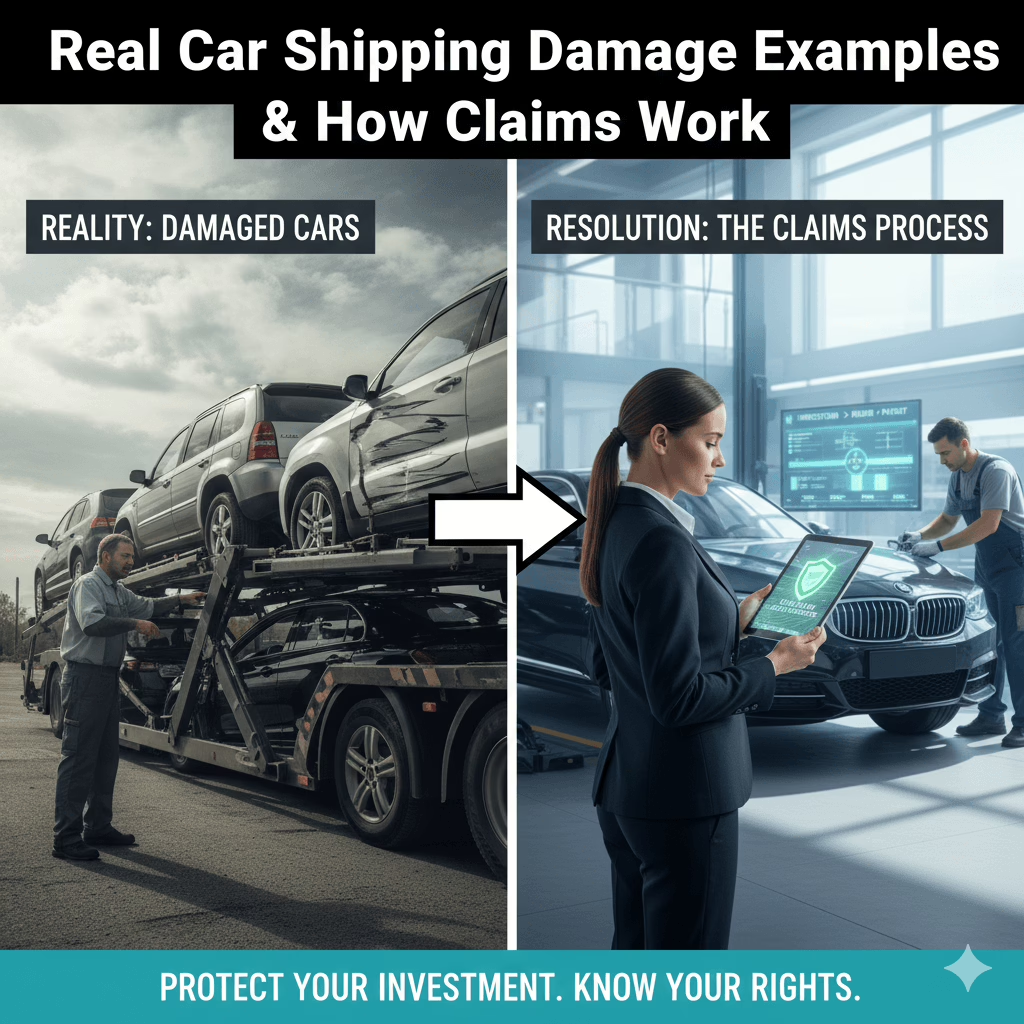
Shipping a vehicle across the country is a routine process for thousands of customers every day, but the fear of damage during transport is real—and justified. A single scratch, dent, or mechanical issue can quickly turn excitement into stress, especially when customers don’t fully understand how a car shipping damage claim actually works. The problem isn’t that damage is common; it’s that the claims process is often misunderstood, poorly explained, or oversimplified by many companies.
Industry data shows that less than 5% of vehicle shipments result in a damage claim, and the majority of those involve minor cosmetic issues rather than serious structural damage. Yet online horror stories, vague insurance language, and unclear responsibilities between carriers and brokers create unnecessary anxiety for people who are otherwise ready to book. This gap between perception and reality is exactly where most confusion—and costly mistakes—happens.
Why Car Shipping Damage Fears Are Valid (But Often Overstated)
Worrying about vehicle damage during transport isn’t irrational. You’re handing over a valuable asset to a third party, often across thousands of miles, with limited direct control once the car is loaded. That said, the actual risk profile of auto transport damage is very different from how it’s perceived online.
Industry insurance data and carrier reports show that the vast majority of car shipments arrive without any new damage, and when issues do occur, they are typically minor—light scratches, small paint chips, or surface scuffs consistent with road debris and weather exposure. Severe damage and total-loss scenarios do happen, but they are statistically rare and usually tied to extreme events such as accidents, theft, or improper loading.
Much of the fear comes from confusion around coverage. Customers often don’t clearly understand:
-
The difference between cosmetic vs. structural damage
-
How pre-existing damage is evaluated
-
What level of carrier insurance actually applies to their shipment
This is why some brokers offer optional premium protection layers on top of standard carrier insurance. For example, Navi provides premium car shipping coverage options designed to reduce out-of-pocket exposure, close common coverage gaps, and offer additional support if a claim becomes complex. This doesn’t change who is legally responsible for damage, but it does change how protected the customer feels—and how smoothly issues are handled if something goes wrong.
Online reviews tend to focus on worst-case outcomes, not the thousands of routine, damage-free shipments that happen every day. In reality, damage risk exists, but claim risk is usually procedural, not random. Understanding coverage levels upfront—standard vs. premium—dramatically reduces both anxiety and financial exposure.
Damage Risk Reality Check
10,000 Shipments → ~9,500 No Damage → ~450 Minor Cosmetic → ~45 Claimable → <5 Severe
Real Auto Transport Damage Examples (Approved vs Denied)
Understanding how a car shipping damage claim plays out is much easier when you see real outcomes—not generic promises. Below are common damage scenarios customers experience, along with why some claims are approved and others are denied. This is where most large brokers stay vague; clarity here prevents costly mistakes.
Example 1: Minor Paint Scratch After Open Transport (Approved)
What happened: A light scratch on the rear quarter panel caused by road debris.
Why it was approved:
-
Damage was clearly noted on the Bill of Lading at delivery
-
Photos were taken immediately, before the vehicle was moved
-
Scratch was not present on pickup inspection
Outcome: Carrier insurance approved the claim and paid for paint correction.
Takeaway: Minor cosmetic damage is claimable when documented correctly.
Example 2: Door Dent Found the Next Day (Denied)
What happened: Small dent discovered after the customer drove home.
Why it was denied:
-
Bill of Lading was signed “clean”
-
No delivery photos
-
Damage timing could not be proven
Outcome: Claim denied due to lack of proof.
Takeaway: If it’s not written on the Bill of Lading, it usually doesn’t exist legally.
Example 3: Underbody Damage on a Low-Clearance Vehicle (Conditional)
What happened: Scraping damage during loading.
Why it was partially approved:
-
Vehicle was modified
-
Carrier coverage excluded ultra-low clearance unless disclosed
Outcome: Partial payout after review.
Takeaway: Modified or high-value vehicles need extra disclosure and coverage planning.
Example 4: Severe Damage / Total Loss (Rare but Covered)
What happened: Carrier accident during transport.
Why it was approved:
-
Clear liability
-
High-limit carrier insurance
-
Proper documentation
Outcome: Full claim paid under carrier policy.
Takeaway: Total-loss events are rare, but insurance exists for a reason.
Damage Type vs Claim Outcome
| Damage Type | Claim Likelihood |
|---|---|
| Light scratches | ✅ High |
| Small dents | ⚠️ Conditional |
| Mechanical issues | ❌ Low |
| Undercarriage damage | ⚠️ Case-by-case |
| Total loss | ✅ Covered |
Why Coverage Level Matters Here
Standard carrier insurance handles most approved claims, but premium protection options—like those offered by Navi—can reduce disputes, deductibles, and delays, especially for high-value or low-clearance vehicles. This doesn’t replace carrier liability; it strengthens the customer’s position when claims get complicated.
Carrier Insurance vs Broker Assistance (The Biggest Industry Confusion)
One of the most misunderstood parts of any car shipping damage claim is who is actually responsible when something goes wrong. Many customers assume the broker pays for damage, while others believe “fully insured” means unlimited coverage. Neither is accurate—and this confusion is where most frustration starts.
In auto transport, the carrier—not the broker—is legally responsible for physical damage that occurs while your vehicle is in their possession. Every licensed carrier is required to carry cargo insurance, which is the policy used to pay approved damage claims. Coverage limits typically range from $100,000 to $250,000 per truck, shared across all vehicles on that load.
So where does the broker fit in?
A broker’s role is not to insure the vehicle directly, but to:
-
Verify carrier insurance before dispatch
-
Ensure coverage limits align with the vehicle’s value
-
Guide customers through proper documentation
-
Act as a liaison if a claim becomes disputed or delayed
This is also where coverage quality begins to differ. Some brokers simply pass along the carrier’s policy details and disappear after delivery. Others provide structured claims guidance and optional premium coverage layers, which can help reduce deductibles, close common exclusions, and speed up resolution. Navi, for example, offers premium car shipping coverage options designed to support customers beyond minimum carrier insurance—especially for luxury, exotic, or modified vehicles.
Why “Fully Insured” Can Be Misleading
“Fully insured” often means the carrier meets minimum legal requirements—not that every type of damage is covered. Common exclusions include:
-
Mechanical or electrical issues
-
Pre-existing damage
-
Normal wear and tear
-
Undisclosed modifications
Understanding this distinction before booking is critical. Carrier insurance pays the claim; broker support determines how smoothly the process goes.
Responsibility Breakdown
Customer → Broker (coordination & guidance) → Carrier (liability & insurance payout)
Step-by-Step: How to File a Car Shipping Damage Claim (Correctly)
Most car shipping damage claims are not denied because the damage didn’t happen—they’re denied because one of the required steps was missed. The process is strict, predictable, and document-driven. Following these steps exactly protects your claim.
Step 1: Inspect Your Vehicle at Delivery (Do Not Rush This)
Before signing anything, inspect the vehicle in full daylight if possible. Walk around the car slowly and check:
-
All body panels
-
Bumpers and mirrors
-
Wheels and tires
-
Undercarriage (if applicable)
If the driver pressures you to sign quickly, slow it down. Once you sign, liability may transfer.
Key rule: If you see damage, do not move the vehicle until it’s documented.
Step 2: Note All Damage on the Bill of Lading
The Bill of Lading (BOL) is the single most important document in the claims process. Any new damage must be:
-
Clearly written on the delivery BOL
-
Specific (location, size, type of damage)
-
Acknowledged by the driver
Signing a “clean” BOL is the #1 reason claims are denied.
Step 3: Take Photos and Video Evidence Immediately
Capture:
-
Wide shots of the entire vehicle
-
Close-ups of the damage
-
Time-stamped photos if possible
-
Short video walk-around
These visuals must be taken before the vehicle is driven.
Step 4: File the Claim Within the Deadline
Most carrier policies require claims to be filed within 24–72 hours, sometimes sooner. Required documents typically include:
-
Signed Bill of Lading
-
Photo/video evidence
-
Repair estimates
Brokers like Navi assist customers in organizing and submitting these materials correctly, and premium coverage options can further reduce friction if the carrier disputes the claim.
Claim Flow
Pickup Inspection → Delivery Inspection → Damage Noted on BOL → Photos Taken → Claim Filed → Carrier Review → Repair / Payout
Common Mistakes That Instantly Kill Damage Claims
When a car shipping damage claim is denied, it’s rarely because the carrier “doesn’t want to pay.” In most cases, the denial is triggered by a preventable mistake made at delivery or shortly after. These are the most common—and costly—errors customers make.
Mistake #1: Signing a Clean Bill of Lading
The Bill of Lading is the legal condition report. If you sign it without noting damage, the carrier can argue the vehicle was delivered in acceptable condition.
Why this kills claims:
A clean BOL = no proof the damage occurred during transport.
How to avoid it:
Always inspect first, write everything down, then sign.
Mistake #2: Discovering Damage After Driving Away
Once the vehicle leaves the delivery location, the carrier may claim the damage happened later.
Why this kills claims:
Timing can’t be verified.
How to avoid it:
Take photos before moving the vehicle—even if you’re in a hurry.
Mistake #3: Assuming “Fully Insured” Means Everything Is Covered
Carrier insurance has exclusions. Mechanical issues, electrical problems, and wear-related damage are commonly denied.
How to avoid it:
Understand coverage limits and exclusions upfront. For high-value vehicles, premium coverage options like those offered by Navi can help reduce gray-area disputes.
Mistake #4: Waiting Too Long to File the Claim
Many carriers require notice within 24–72 hours.
Why this kills claims:
Late filing voids eligibility.
istake #5: Not Matching Transport Type to Vehicle Risk
Low-clearance, luxury, or modified vehicles face higher risk on standard open trailers.
How to avoid it:
Choose the right transport method and disclose everything upfront.
Claim Killers
❌ Clean BOL
❌ No photos
❌ Late filing
❌ Undisclosed mods
❌ Wrong transport type
How Long Do Car Shipping Damage Claims Take? (Real Timelines)
One of the most common questions after a vehicle arrives damaged is how long the car shipping damage claim process will actually take. The honest answer: it depends on the severity of the damage, the quality of documentation, and how quickly the claim is filed—but there are realistic timelines customers should expect.
For minor cosmetic damage, such as light scratches or small dents, claims are often resolved within 7 to 21 days. These cases are straightforward, repair estimates are simple, and liability is usually clear. When documentation is complete and submitted on time, delays are uncommon.
More complex claims—such as underbody damage, multiple damaged panels, or disputes over pre-existing condition—can take 30 to 60 days. These claims typically require additional photos, inspection reports, or third-party repair estimates. Back-and-forth communication is normal in these situations.
In rare cases involving severe damage or total loss, resolution may take 60 to 90 days or longer, especially if multiple vehicles were involved in an accident or if the carrier’s insurer conducts a deeper investigation. While frustrating, this process is standard across the industry.
What slows claims down most is not the carrier—it’s missing or unclear paperwork. This is where broker support matters. Brokers that actively assist with documentation and follow-up—especially when paired with premium coverage options like those offered by Navi—can significantly reduce delays and keep claims from stalling.
Bottom line: well-documented claims move faster, and realistic expectations prevent unnecessary stress.
Timeline Infographic
Minor Damage → 7–21 Days
Moderate Damage → 30–60 Days
Severe / Total Loss → 60–90+ Days
How the Right Broker Reduces Damage Risk Before Pickup
The best damage claim is the one you never have to file. While carrier insurance exists to handle problems after delivery, risk reduction starts before your vehicle is ever loaded. This is where the quality of the broker makes a measurable difference.
A professional broker does more than find a truck. They verify that the carrier’s insurance limits match the value and condition of the vehicle, confirm licensing and safety history, and ensure the transport method is appropriate. Low-cost brokers often prioritize speed and price over fit, which increases the chance of avoidable damage.
Vehicle matching is critical. Standard open transport works well for most daily drivers, but luxury, exotic, classic, modified, or low-clearance vehicles require additional planning. Enclosed transport, liftgate-equipped trailers, or specialized carriers reduce exposure to road debris and loading risks.
This is also where coverage customization matters. Standard carrier insurance may be sufficient for many vehicles, but higher-value shipments often benefit from premium car shipping coverage options, such as those available through Navi. These options don’t replace carrier liability—they add an extra layer of protection and claims support when stakes are higher.
Clear communication before pickup is another major factor. Accurate vehicle descriptions, disclosure of modifications, and understanding pickup conditions (steep driveways, tight access) prevent loading-related damage. When expectations are aligned upfront, problems are far less likely to occur.
Prevention isn’t about overpaying—it’s about proper planning.
Vehicle Details → Transport Type Match → Carrier Vetting → Insurance Verification → Safe Pickup
Frequently Asked Questions
What happens if my car is damaged during shipping?
If new damage occurs while the vehicle is in the carrier’s possession, it is typically handled through the carrier’s cargo insurance. The damage must be documented on the delivery Bill of Lading and reported within the carrier’s required timeframe. When handled correctly, most valid claims are approved and paid for repairs.
How do I file a car shipping damage claim?
You must:
-
Inspect the vehicle at delivery
-
Note all damage on the Bill of Lading
-
Take photos and videos immediately
-
File the claim within the carrier’s deadline
Missing any of these steps can result in denial, even if the damage is real.
Is car shipping insurance included?
Yes. Licensed carriers are required to carry cargo insurance. However, coverage limits, exclusions, and deductibles vary. This is why some customers choose premium car shipping coverage options, like those offered by Navi, to reduce gaps and disputes—especially for high-value vehicles.
Who is responsible if my car is damaged by the carrier?
The carrier is legally responsible for physical damage during transport. The broker does not pay the claim but typically assists with documentation, communication, and escalation if needed.
How long does an auto transport damage claim take?
-
Minor cosmetic damage: 7–21 days
-
Moderate damage: 30–60 days
-
Severe damage or total loss: 60–90+ days
Clear documentation significantly speeds up resolution.
Can a damage claim be denied? Why?
Yes. Common reasons include:
-
Clean Bill of Lading
-
Late reporting
-
No photos or proof
-
Pre-existing damage
-
Excluded damage types
Most denials are procedural, not arbitrary.
What should I check before signing the Bill of Lading?
Confirm the vehicle’s condition matches what’s written. If anything is new—even minor—write it down before signing. Once signed clean, claims become extremely difficult.