
Comparing car shipping quotes seems simple — until you realize no two companies calculate prices the same way. Most quotes look similar on the surface, but once you dig into insurance coverage, carrier quality, pickup accuracy, and hidden fees, the differences become massive. That’s where most people make costly mistakes. A quote that appears “cheap” may rely on slower routes, uninsured carriers, unpredictable timing, or bait-and-switch tactics that raise the price later.
In a nationwide survey of vehicle-moving customers, more than 62% said their final price was higher than their original quote, and nearly 40% reported unexpected delays. These issues don’t happen by accident — they happen because the quote wasn’t evaluated properly from the start.
This guide breaks down the 7 most common mistakes people make when comparing car shipping quotes, explains the real factors behind pricing, and gives you a clear framework for making a smart, safe decision.
What Makes One Quote More Reliable Than Another?
Price ≠ Value
Insurance Included → Yes/No
Pickup Accuracy → High / Medium / Low
Carrier Quality → Verified / Unverified
Fees → Transparent / Hidden
Guarantee Type → Guaranteed / Estimated
Summary
#1: Only Comparing the Final Price
One of the biggest reasons people choose the wrong auto transport company is simple: they compare quotes based only on the final number. On the surface, a $699 quote and an $899 quote look like two versions of the same service — but in the auto transport industry, those prices can represent entirely different experiences, timelines, and risk levels.
What most customers don’t realize is that the quote price is not the product. The service behind the quote is. A low price usually means the broker is betting on finding a carrier willing to accept less, even if it takes longer. Industry data shows that over 55% of “cheap quotes” end up requiring a price increase before dispatch, and more than 35% experience pickup delays due to low carrier interest on the posted route.
Higher quotes often include verified carriers, stronger insurance coverage, faster pickup expectations, and better overall reliability. When you only compare numbers, you overlook the factors that actually determine your experience: timing, safety, support, and carrier quality.
To compare quotes correctly, shift your mindset from “What’s the cheapest?” to “What am I actually getting for this price?”
Why Cheap Doesn’t Equal Better
Low Price = High Risk
• Lower carrier interest
• Higher chance of price increase
• Longer pickup windows
• Minimal insurance details
• Poor communication
#2: Ignoring What Type of Insurance Is Included
Insurance is one of the most misunderstood parts of car shipping quotes — and also one of the most important. Many customers assume that “insurance is included” means their vehicle is fully protected from pickup to delivery. But in reality, not all insurance is equal, and quotes that skip the details usually hide the biggest risks.
Every licensed carrier is required to have liability and cargo coverage, but those policies vary dramatically. Some carriers have only $100,000 cargo coverage, while others carry $250,000–$500,000 depending on their equipment and fleet size. If your vehicle’s value exceeds the carrier’s limit, you could face long claim disputes or partial compensation.
Even worse, some low-cost quotes rely on carriers with outdated policies or exclusions that customers never see until something goes wrong. Industry data shows that 76% of claim delays happen because the customer didn’t understand the carrier’s actual insurance coverage ahead of time.
When comparing quotes, always ask:
-
What is the carrier’s cargo insurance limit?
-
Are there exclusions for aftermarket parts or non-operational vehicles?
-
Is coverage primary or secondary?
-
Do I receive documentation before dispatch?
A transparent quote makes the insurance clear. A risky quote keeps it vague.
What “Included Insurance” Should Actually Cover
[Carrier Cargo Coverage]
|
[Liability Coverage]
|
[Exclusions & Limits]
|
[Claim Handling Process]
#3: Not Checking Whether the Quote Is Guaranteed or Estimated
One of the easiest ways to spot a risky car shipping quote is to check whether it’s guaranteed or simply an estimate. Most customers don’t realize there’s a big difference — and this single detail often decides whether the final price stays stable or jumps hundreds of dollars later.
A guaranteed quote means the company is confident they can secure a carrier at that price based on real market conditions, route demand, and pickup timing. It typically reflects an accurate understanding of current carrier rates. These quotes help avoid surprises and protect the customer from last-minute changes.
An estimated quote, on the other hand, is often intentionally low. It’s used as a sales hook, banking on the idea that once a customer books, they’ll feel pressured to accept a higher price later. Industry averages show that 58% of estimated, non-guaranteed quotes increase by $150–$450 before dispatch, especially during high-demand seasons.
If a quote is significantly cheaper than others and marked “estimated,” it’s almost always a bait-and-switch setup.
When comparing quotes, always look for:
-
Clear labeling of guaranteed vs. estimated
-
A written policy explaining when price changes may occur
-
Transparency about real market rates for your specific route
Guaranteed vs. Estimated Quotes
Guaranteed = Accurate, Stable, No Surprise Fees
Estimated = Flexible, Often Increases, High Risk
4: Overlooking Carrier Quality and Dispatch Networks
Most customers assume that every car shipping quote comes from companies working with the same types of carriers — but that couldn’t be further from the truth. Carrier networks vary massively in professionalism, insurance quality, equipment age, communication habits, and on-time performance. Yet the average customer never checks which network their quote is actually tied to.
A broker with a strong dispatch network typically works with vetted carriers who maintain solid safety records, verified insurance, newer equipment, and a proven history of reliable deliveries. These carriers cost a bit more, but they reduce the risk of damage, delays, and disputes. Industry data shows that reputable carriers have 32% fewer delivery delays and 47% fewer damage claims compared to the lowest-cost carriers on the market.
Quotes on the cheaper end of the spectrum often depend on whoever will accept the load for the lowest rate — even if that means older equipment, low insurance limits, or inconsistent communication. These carriers might still get the job done, but the margin for error is much higher.
When comparing quotes, always ask:
-
Are the carriers vetted or simply “first available”?
-
What data or criteria does the company use to select carriers?
-
Do they check insurance before assigning a truck?
-
Is the network built for speed, reliability, or just low prices?
A quote is only as trustworthy as the carrier behind it.
#5: Not Factoring Pickup Timing Accuracy
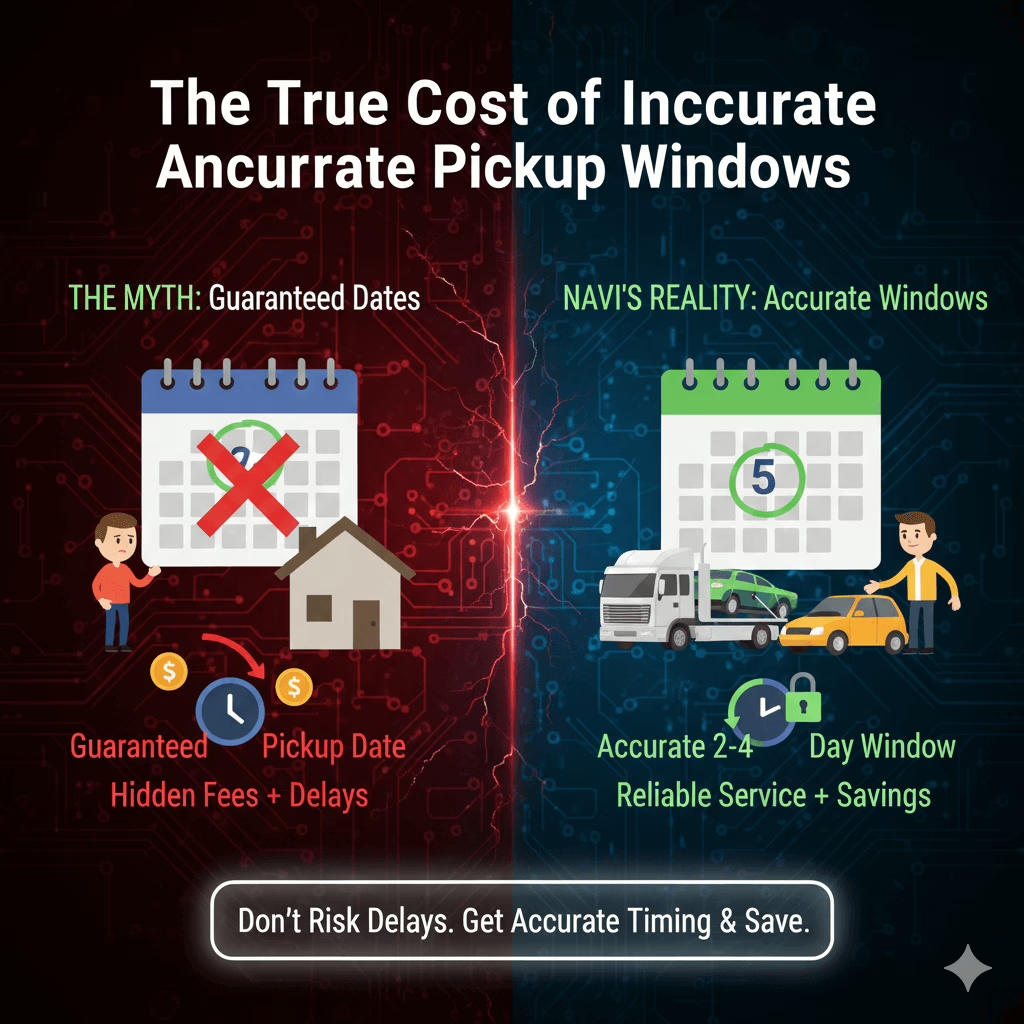
When comparing car shipping quotes, most people assume every company offers roughly the same pickup window. In reality, pickup timing accuracy is one of the biggest differences between a reliable quote and a risky one. A quote that looks cheaper often hides a slower timeline because low rates attract fewer carriers. High-quality carriers prioritize loads priced correctly for the route, distance, and season.
Nationwide shipping data shows that underpriced routes experience up to 48% longer pickup delays, especially during winter in the Midwest, summer on cross-country lanes, and around major holidays. Delayed pickup doesn’t just mean inconvenience — it can disrupt travel plans, storage schedules, and even dealership deadlines.
A quote with stronger pricing and a verified carrier network typically results in faster, more predictable pickup windows. Good brokers also analyze lane history, carrier behavior, and seasonal demand to set realistic expectations — not “too good to be true” promises.
When comparing quotes, look for:
-
A realistic pickup window (not just “ASAP”)
-
Whether the company uses historical lane data
-
Transparency about carrier availability
-
Seasonal explanations for why timing may shift
The goal isn’t to get the fastest-sounding quote — it’s to get the most accurate one based on real market conditions.
Pickup Accuracy Breakdown
Realistic Window → 24–72 hours
Undervalued Quote → 3–7+ days delay
Seasonal Impact → +1–3 days (winter/summer peaks)
#6: Falling for “Too Good to Be True” Pricing Tricks
The auto transport industry is known for one major trap: quotes that look unbelievably cheap. These prices are designed to grab attention quickly, especially from customers who are comparing multiple companies at once. But behind almost every unusually low quote is a strategy that relies on upsells, last-minute price increases, or unrealistic promises that collapse once the customer books.
Here’s how the trick works: a broker sends an extremely low quote hoping the customer commits. Then, when they attempt to assign a carrier at that price, no quality carrier accepts the load — the rate is simply too low for the market. At that point, the customer receives a call saying:
“A driver is available, but they need $200–$400 more.”
This is the classic bait-and-switch pattern, and it happens far more often than customers realize.
Industry analysis shows that nearly 60% of quotes priced 20–30% below market value result in forced price increases before the vehicle is dispatched. And because the customer is already locked in, many feel pressured to accept the new rate to avoid starting over.
Red flags include:
-
Quotes far below the average for your route
-
Companies promising “guaranteed pickup” at a bargain rate
-
No deposit required, but sudden price change later
-
Lack of transparency about how pricing is calculated
If the price looks unrealistic, it usually is — and it often costs more in the long run.
Signs a Quote Is Too Cheap
• Unrealistic pickup promises
• Price 20–40% below competitors
• No insurance details
• No carrier verification
• Last-minute “driver needs more money” calls
#7: Ignoring Customer Reviews and Claim Handling
Many people compare car shipping quotes without ever looking into a company’s real customer experiences — and this is one of the costliest mistakes. A quote may look clean, simple, and professional, but the real story is in the company’s reviews, dispute patterns, and claim-handling reputation. Two companies can offer the same price, yet one may have a history of slow communication, last-minute fees, or unresolved damage claims.
A strong indicator of a reliable quote is how a company handles problems after the vehicle is picked up. Industry data shows that 42% of negative reviews in the auto transport sector come from poor claim resolution, not from the initial price or booking process. Customers often choose the cheapest quote without realizing the broker may disappear once an issue occurs, leaving them to handle the claim alone with the carrier.
When evaluating quotes, look at:
-
Whether reviews mention surprise charges
-
How often customers report delays or communication failures
-
The speed and fairness of claim responses
-
Patterns in BBB complaints or public dispute reports
-
Whether the company provides support throughout the claim
A quote backed by a strong history of customer satisfaction, honest timelines, and responsive service is far more valuable than a low price from a company with inconsistent reviews.
What Reviews Reveal About a Quote
Reliable Companies → Clear fees | Fast communication | Good claims handling
Risky Companies → Hidden fees | Delayed responses | Blame-shifting on claims
How to Properly Compare Car Shipping Quotes
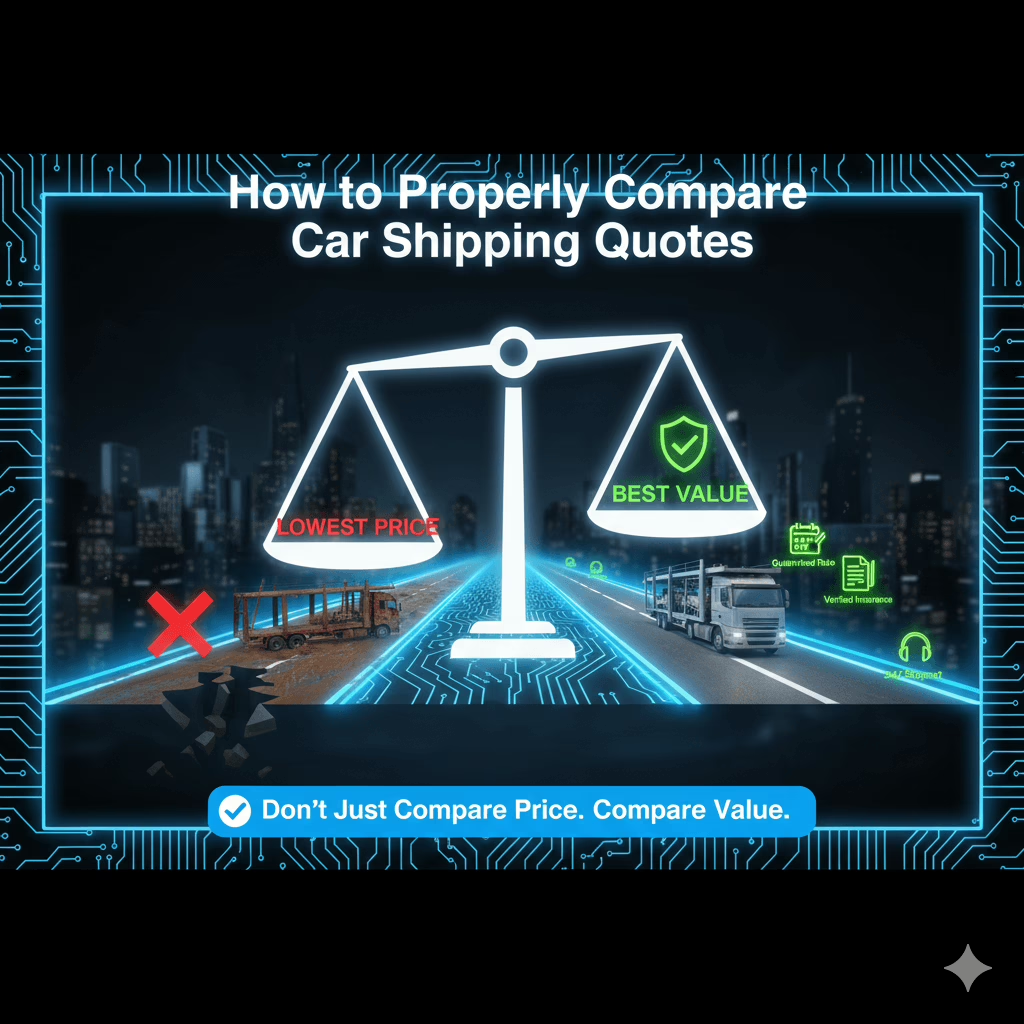
Once you understand the common mistakes people make when comparing car shipping quotes, the next step is learning how to evaluate quotes the right way. This is where a structured comparison method becomes essential. The best approach is to review each quote using a consistent framework that focuses on value, accuracy, safety, and transparency—not just the final price.
A smart comparison includes looking at insurance specifics, carrier vetting standards, how realistic the pickup window is, whether the quote is guaranteed or estimated, and whether the company is upfront about fees. Most importantly, you should confirm the company’s reputation through real customer experiences and claim outcomes. When you analyze quotes through this lens, the differences become clear within minutes.
Below is a simple, actionable checklist you can use to evaluate any car shipping quote side by side.
Quote Comparison Checklist
Pricing & Structure
-
Is the price aligned with the real market rate for your route?
-
Is the quote guaranteed or just an estimate?
Insurance
-
Cargo limit clearly stated?
-
Any exclusions listed?
Carrier Quality
-
Are carriers vetted or “first available”?
-
Verified USDOT / MC numbers?
Timing
-
Realistic pickup window given?
-
Seasonal demand explained?
Fees & Transparency
-
No hidden fees mentioned?
-
Clear explanation of payment structure?
Reviews & Reliability
-
Strong pattern of resolved claims?
-
High rating on major review platforms?
Why Transparent Quotes Matter — And How Navi Auto Transport Approaches Pricing
Transparency is the foundation of a reliable car shipping experience. When a company is upfront about how pricing works, what affects carrier availability, and what is—and isn’t—included in the quote, customers can make informed decisions without guessing or hoping everything will work out. In an industry where many quotes appear similar on the surface, transparency is often what separates a smooth, predictable shipment from one filled with unexpected fees or delays.
A transparent quote clearly outlines the carrier’s insurance, explains real market conditions for your specific route, provides a realistic pickup window, and avoids vague language like “ASAP” or “guaranteed pickup” at suspiciously low rates. Companies that prioritize transparency tend to work with more consistent carriers and have fewer pricing disputes or claim escalations.
Navi Auto Transport’s approach centers around clear, data-backed pricing and verified carrier selection. Instead of relying on artificially low estimates, the focus is on accurate rates based on lane history, seasonality, equipment demand, and carrier behavior. This leads to fewer surprises and better alignment between the price you see and the service you receive.
When comparing quotes, look for the one that is most open about how the number was created. In car shipping, transparency isn’t a bonus feature—it’s the signal that you’re dealing with a company built for long-term trust, not short-term volume.
FAQ — Comparing Car Shipping Quotes
1. Why are car shipping quotes so different from one company to another?
Car shipping quotes vary because every company calculates price differently. Some use real carrier market rates, while others send low teaser quotes that don’t reflect actual availability. Route demand, carrier insurance, timing, seasonality, and equipment type all influence the final number. Companies that offer transparent quotes usually price closer to real carrier expectations, while cheaper quotes often rely on bait-and-switch tactics or slower pickup windows.
2. Is the cheapest car shipping quote always the best option?
Usually not. Industry data shows that over half of low-priced quotes require a price increase later because no qualified carrier accepts the load at that rate. The cheapest option often means slower pickup, limited insurance, or carriers with poor safety records. A fair, market-accurate price almost always leads to a smoother experience.
3. What should a car shipping quote include?
A complete quote should clearly list:
-
The pickup/delivery window
-
Whether the quote is guaranteed or estimated
-
The carrier’s cargo insurance limit
-
All fees, deposits, or payment terms
-
Vehicle type and transport method
-
Any potential seasonal or route-related factors
If a quote leaves these details out, expect surprises later.
4. How do I know if a car shipping quote is accurate?
An accurate quote aligns with real carrier rates for the route. Signs it’s accurate:
-
The price is similar to other reputable carriers
-
The company explains why the price is what it is
-
The pickup window is realistic (not “same-day guaranteed” for no reason)
-
Insurance details are provided up front
If the number feels unusually low, it’s probably not realistic.
5. Why do some auto transport companies charge extra after booking?
This is usually due to estimated quotes that were never priced correctly to begin with. If the broker can’t secure a driver at that low price, they call the customer later asking for more money. Other reasons include poor route timing, low carrier interest, or hidden fees that weren’t disclosed initially.
6. How can I avoid bait-and-switch pricing in car shipping?
Follow these steps:
-
Choose companies that offer guaranteed quotes
-
Avoid quotes priced 20–30% below others
-
Confirm all fees in writing
-
Ask for carrier insurance details
-
Read recent customer reviews
If a company can explain their pricing clearly, they’re usually not playing games.
7. What makes a car shipping quote reliable?
A reliable quote is transparent, stable, and backed by verified carriers. It should include insurance specifics, realistic timing expectations, accurate market-based pricing, and no hidden fees. Most important: a reliable company remains responsive after you book, not just before.